The time needed to run 5K continuously varies. Start from sessions that fit your current health, activity, and recovery, and repeat or shorten them as needed; no eight-to-twelve-week or six-to-eight-week range is a universal prediction.

Progress toward continuous running varies. A plan’s week count does not establish aerobic or connective-tissue readiness, and thirty minutes of running is not necessarily five kilometres.
Why does it take weeks, not days?
Running is a skill your cardiovascular system, muscles, and joints all have to adapt to together, and they adapt at different speeds:
- Your heart and lungs adapt differently from person to person; easier breathing has no universal two-to-three-week deadline.
- Muscles and tendons respond differently from person to person; a number of weeks does not prove readiness for more impact.
- Your habit and pacing sense — use your practice sessions to explore a manageable effort, without expecting it to click in a particular week.
Pace, training load, recovery, and health can all affect progress and symptoms. Persistent shin or knee pain deserves appropriate advice rather than a guessed cause.
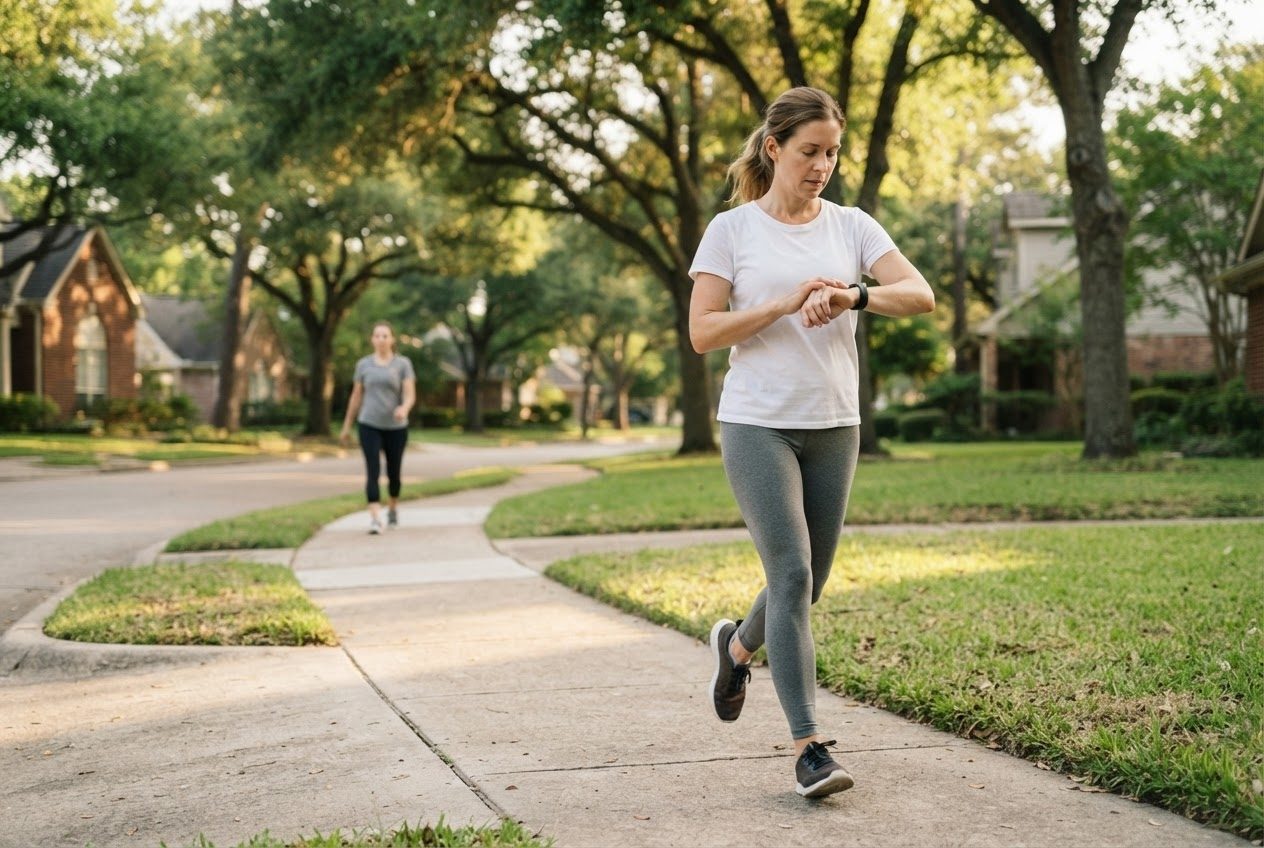
What does an 8–12 week progression actually look like?
There's no single official plan, but nearly every beginner 5K program follows the same shape — the run/walk method, with running intervals growing and walking intervals shrinking:
- Weeks 1–3: Run 1 minute, walk 2 minutes, repeat for 20–25 minutes total.
- Weeks 4–6: Run 3 minutes, walk 1–2 minutes, repeat.
- Weeks 7–9: Run 8–10 minutes, walk 1–2 minutes, repeat. Weeks 10–12: build toward comfortable continuous running; check the actual distance rather than equating 20–30 minutes with 5K.
For the full breakdown of why walk breaks work rather than slow you down, read how to run longer without stopping.

What actually speeds this up or slows it down?
- Choose a manageable routine. More sessions or harder effort do not automatically mean better progress; adjust to your recovery and symptoms.
- Starting fitness matters more than age. A 45-year-old who walks daily often progresses faster than a sedentary 22-year-old.
- Rest days aren't optional. Muscles and tendons rebuild stronger on the days you don't run, not the days you do.
- Sleep and nutrition are part of training, even though they don't feel like it.
- Terrain and heat slow perceived progress without meaning you're actually behind — a 5K on trails or in September heat feels harder than the same distance on a flat, cool morning.
How do I know I'm actually ready to run the whole 5K?
Comfortable intervals can be useful feedback, not proof that you are ready to run five kilometres continuously. Extend gradually if appropriate, keep walking breaks available, and stop for concerning symptoms.
Tracking each week's run/walk splits also makes the progress visible on days it doesn't feel like anything's changing — even a phone's stock timer or a free app is enough; see how to track a run with just your phone if you don't want a watch. For the runs where you'd rather have both hands free, our running phone armband keeps your phone snug and out of the way while it tracks.
FAQ
Can I get there faster than 8 weeks? Some runners reach the distance sooner than others, but no compressed timeline establishes that it is safe for you. Repeat or shorten sessions when needed.
What if I miss a week of training? After a break, choose a session that fits how you feel now. Repeat, shorten, or step back when appropriate rather than automatically resuming or using a fixed number of missed weeks.
Do I need to run 5K nonstop to call it a "5K race"? No — plenty of first-timers walk through water stops or brief stretches in an actual 5K event and still finish strong. "Running it without stopping" is a training milestone, not a race requirement.
Run happy, run free.