Precautions can reduce night-running risks, but cannot make it completely safe.
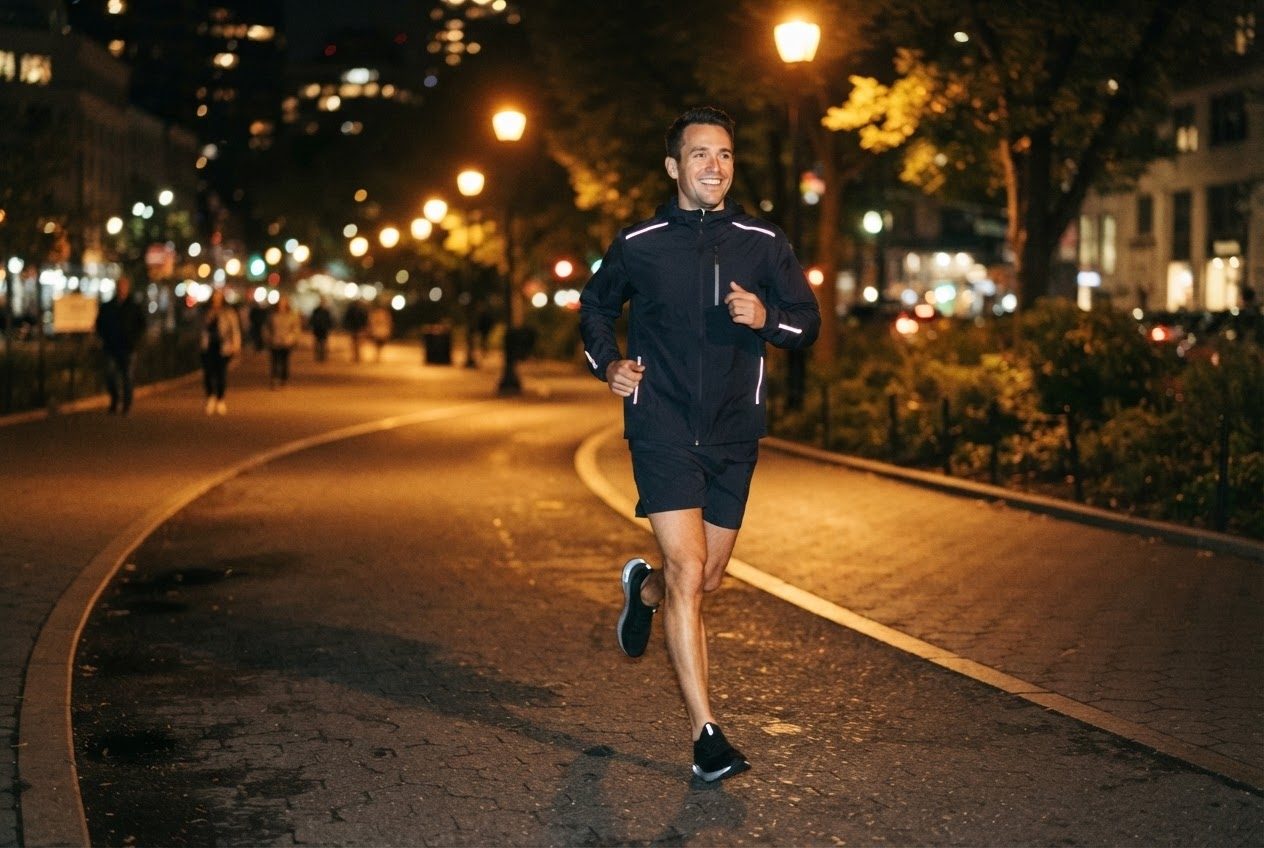
Why beginners love running at night
For a lot of people, the evening is the only free window in their day. And honestly, it has real advantages:
- Cooler temperatures — especially welcome in Korean summers, when daytime heat and humidity can feel brutal.
- Less crowd pressure — fewer people on the path means less self-consciousness, which beginner runners often appreciate.
- A natural stress valve — going for a run after work helps your body and mind switch off before bed.
- Quieter streets — many runners find nighttime runs more meditative and enjoyable than their morning counterparts.
Visibility and awareness both need attention, but neither is guaranteed. Choose a route and conditions you can manage, and switch to daylight or another setting when needed.
What to wear for night running
The single biggest safety upgrade for night running is visibility — making sure drivers and cyclists can see you from a distance.
Use reflective details and lights; bright color alone is not enough in darkness.
- Consider suitable lights. Check the product's visibility claims and use lights and reflective details appropriate to the route; a light does not guarantee that drivers will see you.
- Avoid all-black or dark grey. Even if you feel stylish, dark clothing makes you nearly invisible to drivers at night.
Related: check out what to wear for your first run for general gear advice that applies day or night.

Choose the right route
For night runs, familiar and well-lit beats interesting and unknown.
- Stick to routes you already know. Uneven pavement or unexpected steps are harder to spot in low light, and a twisted ankle is no fun. Once you know a path well, you can run it confidently after dark.
- Choose well-lit paths. Parks with streetlamps, riverside paths, and pedestrian promenades (like Busan's Gwangandaegyo area or the Nakdong River path) are excellent for night running.
- Prefer a sidewalk or separated path. If local rules permit using a road without a sidewalk, follow the applicable pedestrian guidance and avoid routes where traffic or visibility makes the outing unsuitable.
- Share your route. Before you head out, let someone at home know where you're going and when you expect to be back. A quick message takes five seconds.
Always carry your phone — securely
Your phone is your safety net at night: for emergencies, navigation if you take a wrong turn, and as a torch if a section of path goes dark. The problem with hand-carrying it is that it's easy to drop, and your arms need to swing freely for good running form.
A LULURUN running armband uses an open silicone holder with direct screen access. Check its 10–16-inch upper-arm range and pause somewhere safe before using or adjusting the phone.
Related: how to carry your phone while running covers your options in full.

Stay aware of your surroundings
Running at night requires a little more alertness than daytime runs. A few habits help:
- Use one earbud, or keep the volume low. Music and podcasts are great motivation, but you need to hear approaching bikes, dogs, or cars. Running with one earbud out is the simplest solution.
- Carry ID. A road ID wristband, a card in your pocket, or even your phone (which has your emergency contact info) is enough.
- Trust your instincts. If a street or path feels off, turn around. There's no rule that says you have to finish a planned route.
A simple night run checklist for beginners
Before you head out:
- Suitable reflective details and lights; bright color alone is not enough in darkness
- Phone charged and in your armband
- Route planned (familiar + lit)
- Someone knows where you're going
- One earbud in, one out (or volume low)
- Optional: clip-on blinky light
Keep your first few night runs short — 20 to 30 minutes is plenty. You're building a new habit and learning what feels comfortable in the dark. Once you've done it a few times, it becomes second nature.
FAQ
Is it safe for beginners to run alone at night? Precautions can reduce risk but do not make every route or outing safe. Check lighting, traffic, local conditions, and your comfort; choose daylight or another location when needed.
What time should I start my night run? Early evening — right after sunset — tends to offer the best balance of cooler air and decent lighting. Avoid running very late if you're new to it; get comfortable with the routine before pushing the hours later.
Can I use a headlamp for running at night? Route lighting and being visible to others are different needs. Choose lighting and reflective or illuminated gear suited to the route; neither a headlamp nor a clip-on light guarantees safety.
Night running is one of those things that sounds daunting until you try it once and realize how calm and freeing it actually feels. Start on a route you know, gear up for visibility, and take it easy on that first outing. The streets are yours.
Run happy, run free.