Running in summer heat is completely doable for beginners — you just need to adjust a few things. Slow down, pick the right time of day, stay hydrated, and your body will adapt to the warmth faster than you'd expect.
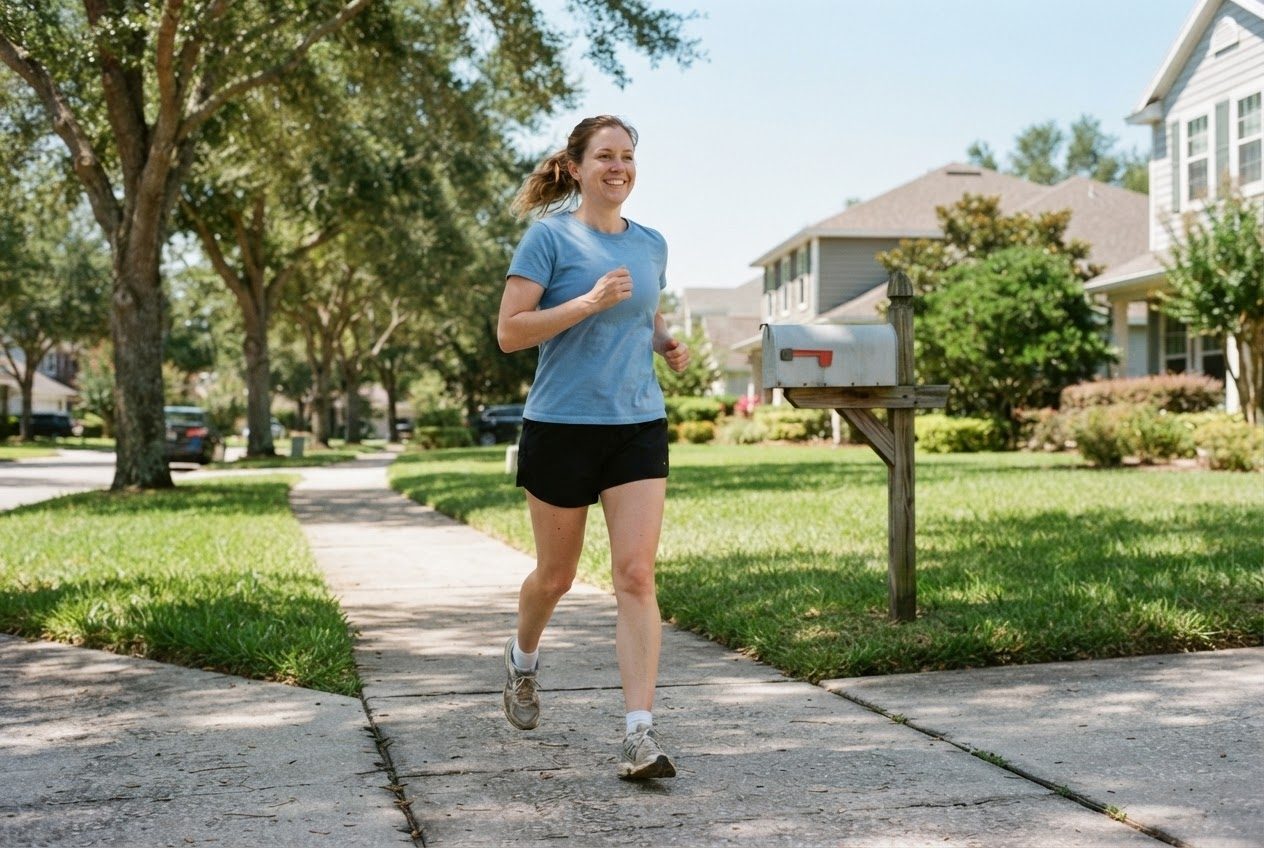
Can I run when it's hot outside?
Yes. Most healthy beginners can run in summer heat safely as long as they respect the conditions. Your body is remarkably good at cooling itself, but it needs a little help from you: easier effort, more water, and smarter timing. On humid Busan summer days, that's especially true — the moisture in the air slows how fast sweat evaporates, so your body works harder to keep cool.
Expect your runs to feel harder than the same distance in spring. That's not a fitness problem — it's physics.
Slow down (seriously — by more than you think)
Heat raises your heart rate at any given pace. Your body diverts blood to your skin for cooling, leaving less for your muscles. The practical result: a pace that felt easy in April will feel genuinely hard in July.
The fix is to run by effort, not pace. Use the talk test: if you can speak in full sentences without gasping, your effort is right. On a hot day, that might mean running 1–2 minutes per kilometre slower than your usual easy pace. That is completely normal and not a sign of lost fitness.
Leave your pace expectations at the door when it's hot. Effort is the metric that matters.

Time your runs for the cooler parts of the day
- Early morning (6–7 am) — the air is at its coolest, the sun is low, and the streets are quiet
- After sunset — temperatures drop quickly once the sun goes down
- Avoid 11 am – 4 pm — peak sun and peak pavement heat; save this window for rest or indoor activity
In Busan, an early-morning run along the Nakdong River path or Songjeong Beach is one of the nicest things you can do in summer. The light is soft, the breeze off the water helps, and you'll have most of the trail to yourself.
Hydration: a simple approach
You don't need a complicated system. A few reliable habits cover most beginner runs:
- Before your run: drink water steadily in the 30–60 minutes leading up to it — don't chug all at once
- Runs under 40 minutes: you generally don't need water mid-run if you hydrated beforehand
- Longer runs: carry a small bottle or plan a route past a water fountain or convenience store (Korea's 편의점 network makes this easy almost everywhere)
- After your run: drink to satisfy thirst — it's a reliable guide
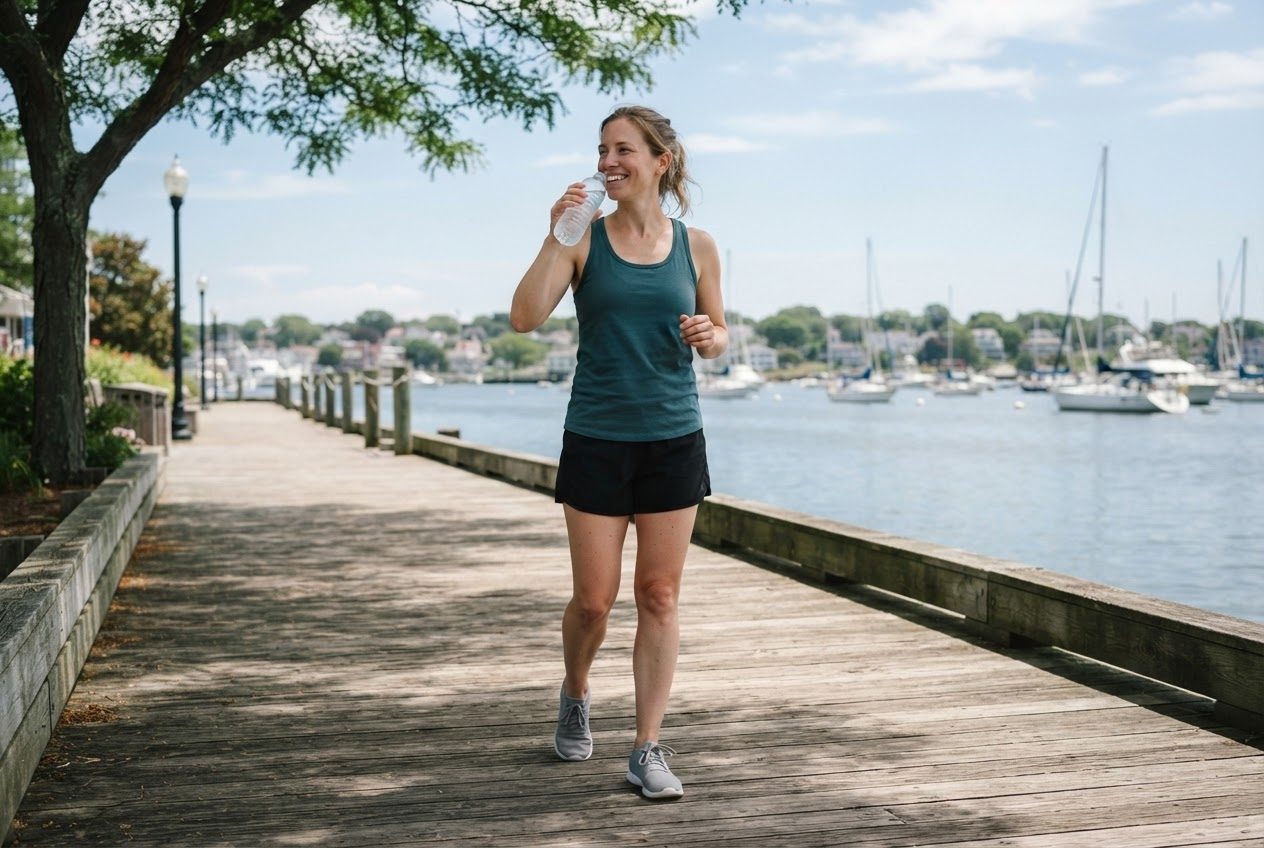
For runs under an hour, plain water is all you need. Sports drinks can help if you're sweating heavily for longer than that, but they're not necessary for short outings.
What to wear in summer
Clothing makes a bigger difference than most beginners expect:
- Light colours (white, pale grey, sky blue) reflect sunlight; dark colours absorb it
- Moisture-wicking fabric (polyester, nylon) pulls sweat away from your skin and dries fast — avoid cotton, which holds moisture against you
- Hat or visor shields your face and keeps sweat out of your eyes
- Sunscreen on any exposed skin, especially on longer morning runs
The right kit really does make the heat feel more manageable. Browse the LULURUN shop for lightweight summer-ready gear designed with beginner comfort in mind.
Know the warning signs — and stop if they appear
Hot weather running is safe for most people at easy effort, but it's worth knowing when to stop:
- Dizziness or sudden lightheadedness
- Nausea or a headache that comes on quickly
- Stopping sweating despite the heat (a warning sign, not relief)
- Feeling confused or unusually disoriented
If any of these happen: stop running, find shade, sip water, and cool down. These symptoms are uncommon on easy runs in mild heat, but good to recognise.
Your body adapts — give it 10–14 days
The first few hot runs will feel the hardest. That's because your body hasn't fully heat acclimatised yet — a real physiological process where your blood volume increases, you start sweating sooner, and your cardiovascular system becomes more efficient in the heat. It takes about 10–14 days of consistent, easy running in warm conditions to kick in.
Start short. Keep effort low. If you're newer to running, the run/walk method is a great way to ease into summer training without overdoing it.
A quick summer run checklist
- Run early morning or after sunset — avoid midday
- Wear light-coloured, moisture-wicking clothes
- Hydrate steadily in the 30–60 minutes before heading out
- Run by effort (talk test), not pace
- Plan a route with shade or water access for anything over 30 minutes
- Know the warning signs — stop and cool down if something feels wrong
Related: What to Wear for Your First Run · How to Warm Up Before Running
FAQ
How much slower should I run in hot weather? There's no exact formula, but running 1–2 minutes per kilometre slower than your usual easy pace on hot, humid days is completely normal. Use the talk test — if you can speak in full sentences comfortably, your effort is right.
Do I need sports drinks when running in summer? For most beginner runs under 45–60 minutes, plain water is enough. Sports drinks with electrolytes can help on longer runs where you're sweating heavily for an extended period, but they're not necessary for short outings.
Is it okay to take walk breaks when it's hot? Absolutely — walk breaks are one of the smartest tools a runner has, and they're especially useful in summer heat. Taking a break to cool down and catch your breath is smart training, not weakness. See our full guide to the run/walk method.
Run happy, run free.