For a first trail outing, choose a flat, well-marked route and use a manageable effort. Slow or walk for the footing and conditions rather than applying a fixed percentage to your road pace.
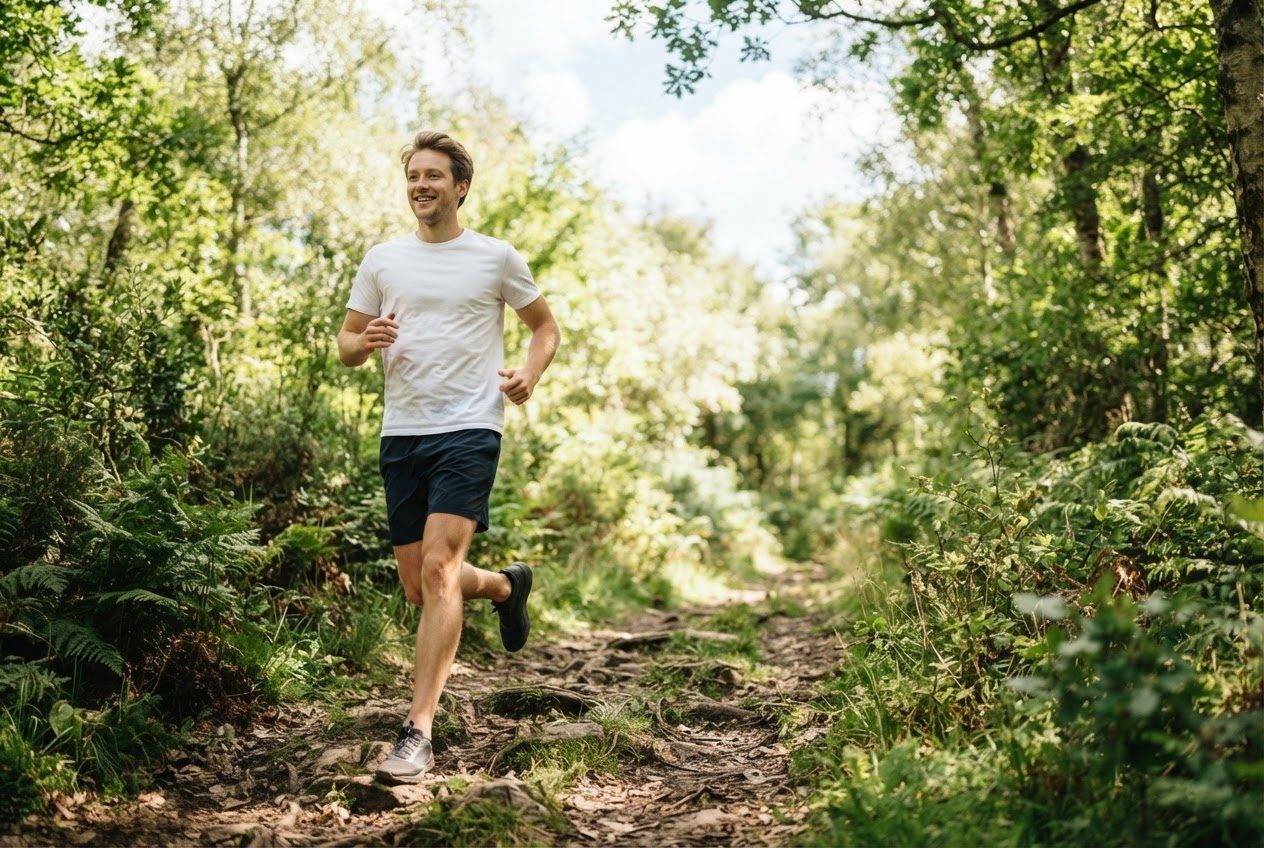
Some soft trails feel comfortable, but uneven terrain creates different demands and fall risks.
What makes trail running different from road running?
The biggest difference isn't the scenery — it's the terrain. Trails are uneven, which means your ankles, hips, and core are constantly making tiny adjustments. That's a workout in itself. You'll also notice:
- Pace can differ from the road. Let footing, slope, and manageable effort guide you rather than aiming for a fixed minutes-per-kilometer difference.
- Cadence stays short and quick. Shorter steps give you more control over uneven ground.
- Eyes stay down (mostly). You'll scan the path 2–3 metres ahead rather than gazing at the horizon.
- Walking uphill is not cheating. Even experienced trail runners walk steep climbs — it's efficient, not lazy.
How to choose your first trail
For your very first trail run, look for:
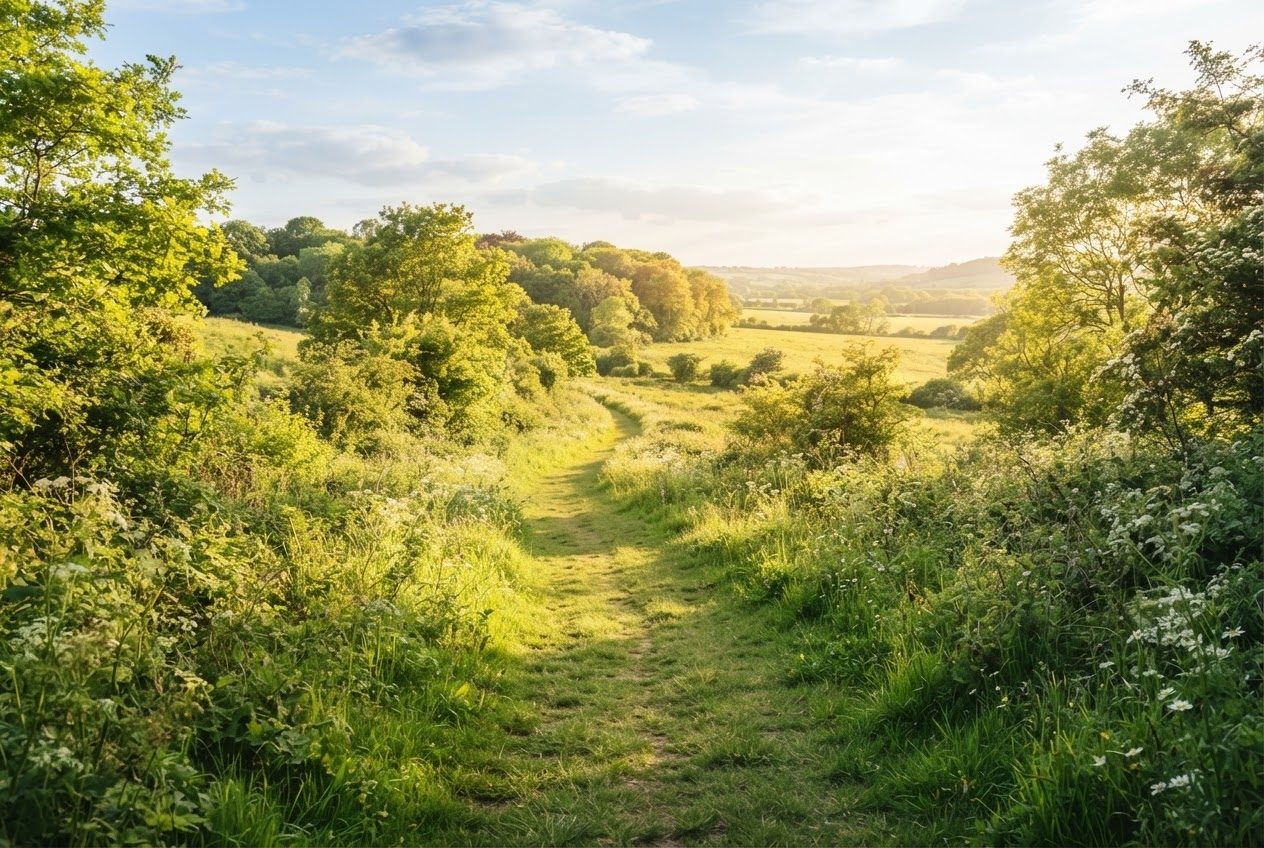
- A flat or gently rolling route. Save the big climbs for later.
- A well-marked path. Avoid anything described as "technical" or "navigation required."
- A shorter outing than usual. Plan a route with an easy return option; distance alone does not tell you whether trail effort will match a road run.
- Good footing. Hard-packed dirt or gravel is ideal. Skip muddy, root-heavy paths until you're comfortable.
In Busan, the trails along Geumjeong Mountain's lower paths or the coastal walking paths around Igidae are beginner-friendly starting points with gorgeous views as your reward.
What to wear and bring for trail running
You don't need specialist gear for your first trail run, but a few small adjustments help:
- Shoes with grip. Road running shoes work for gentle trails, but if you plan to run trails regularly, trail shoes with lugged soles give you far more confidence on loose or wet ground.
- Your phone, within easy reach. A 360° rotating running armband offers an adjustable viewing angle. Stop somewhere safe before checking a map or adjusting the mount, especially on uneven ground.
- Water. Even on short trails, carry water if it's warm. There are no vending machines out there.
- Sun protection. Shaded forest trails are lovely, but exposed ridgelines can surprise you.
Step-by-step: how to run your first trail
Before you go: Use an app with confirmed offline maps and test the downloaded route before leaving.
- Tell someone your plan and expected return time.
- Charge your phone.
On the trail:
- Start slower than you think you need to.
- Look 2–3 metres ahead; scan for roots, rocks, and sudden drops.
- Shorten your stride on technical sections — tiny, controlled steps.
- Walk uphills confidently. Pick up your jog on the flats and gentle descents.
- On downhills, lean slightly forward (not back), keep your arms out for balance, and go at whatever pace feels controlled. Running downhill engages your quads heavily, so don't go wild on your first try.
After your run:
- Do a gentle cooldown walk of 3–5 minutes before you stretch. Your legs have been working hard in stabilising muscles you don't normally use on roads — they'll appreciate the care. See our post-run cooldown guide for ideas.
Common mistakes beginner trail runners make
- Starting too fast. The trail will punish overconfidence quickly. Slow is smooth.
- Wearing road shoes on wet roots. Road shoes are fine on dry, firm trails. On anything wet or rooty, they become ice skates. If in doubt, slow right down or walk.
- Ignoring tired ankles. Trail running activates stabilising muscles that pavement running doesn't. If your ankles feel fatigued partway through, walk — it's your body learning new coordination, not a sign of weakness.
- Not telling anyone where you're going. Trails are quieter than roads. A quick message to a friend or family member takes ten seconds.
Why trail running is great for beginners
Here's the thing roads can't offer: trails force you to slow down and be present. You can't zone out watching your Garmin because the ground in front of you needs your attention. That presence — the sound of leaves, the give of earth underfoot, the occasional uphill that makes you laugh — is exactly the "lulu-lala" feeling LULURUN was built around.
Trail running also naturally teaches good running form: shorter strides, upright posture, relaxed arms. Many road runners find their form improves after spending time on trails.
FAQ
Do I need trail running shoes for my first trail? Not necessarily. On a flat, well-packed trail in dry conditions, road shoes are fine. Once you're hooked on trails, a pair of trail shoes with grip is worth the investment — they make wet or loose terrain much less nerve-wracking.
Is trail running harder than road running? At the same distance, yes — trails ask more of your stabilising muscles and tend to include more elevation change. Expect your pace to be slower and your effort to feel higher. That's completely normal; adjust your expectations and enjoy the scenery.
What if I get lost on a trail? Stop somewhere safe and assess your location using a tested offline map. Retrace only if you can identify the route and do so safely; if you cannot, contact local help or emergency services rather than guessing. Tell someone your plan before leaving.
The trail is patient. It's been there long before you arrived and it'll be there long after. Your only job on that first run is to enjoy the crunch of earth underfoot and the breeze that's doing something the treadmill can never fake.
Run happy, run free.