A phone with a suitable app can track beginner runs, but phone and watch GNSS hardware and accuracy vary by model and conditions.
What can a phone actually track that a watch can't?
Nothing extra — it's really the other way around. A phone with a free app like Strava, Nike Run Club, or adidas Running records the same core data a watch does: route, distance, pace, splits, and total time. If you want the full breakdown of setting that up, see how to track a run with just your phone.
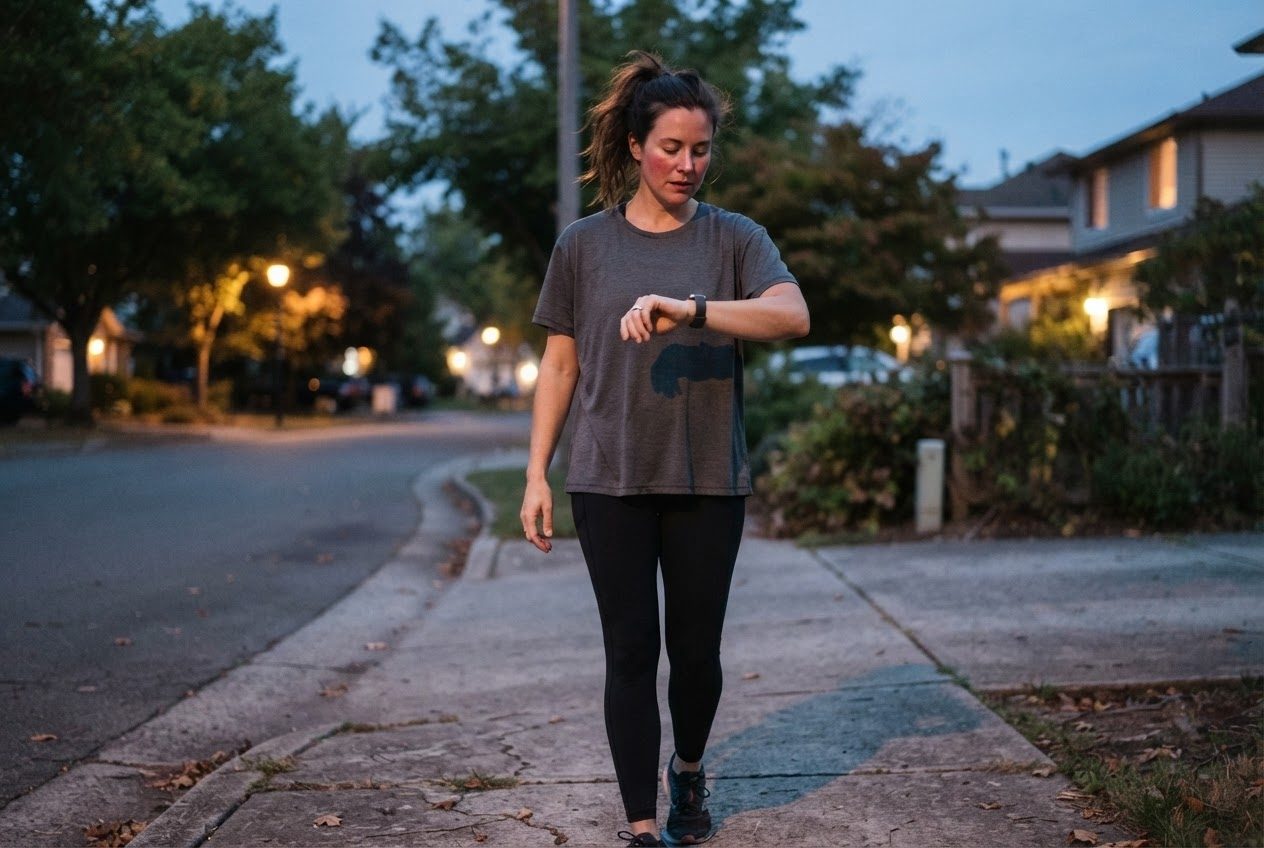
Where a phone genuinely can't compete is live wrist-glance data — you can't check your pace mid-stride without looking at your arm instead of your wrist — and continuous heart-rate monitoring, which needs a wrist or chest sensor a phone doesn't have.

So what does a running watch actually add?
A few things, and they matter more as your training gets more serious:
- Continuous heart-rate tracking — useful once you're training by heart-rate zones rather than just by feel.
- A quick wrist glance — no need to touch or look at a phone screen mid-run.
- Lighter and smaller — nothing swinging or held, which matters over very long runs (half marathon and up).
- Battery options for longer outings — compare the specific phone and watch, settings, conditions, and expected duration. Not every watch provides all-day or multi-day activity tracking.
- Sleep and recovery tools — features and input requirements vary by device and app; compare the actual tools rather than assuming phones cannot provide any sleep information.
None of these are things a beginner running their first 5K or 10K actually needs day one.
When is a phone genuinely not enough?
There are a few real situations where a watch starts to make sense:
- You're training for a half marathon or longer and want to run without carrying anything.
- You're following heart-rate-zone training, which needs continuous readings a phone's camera-based heart-rate check can't replicate mid-run.
- You swim or lift as part of your training and want one device tracking everything.
- You genuinely dislike carrying your phone, even in a comfortable armband, for any distance.
If none of those describe you yet, buying a watch before you need one is money that could go toward better shoes instead.

How do you make a phone comfortable to run with?
Carrying comfort matters alongside tracking accuracy. Our LULURUN running armband has an open silicone holder and a 360° rotating mount. Check fit and compatibility, and pause somewhere safe before checking pace, distance, or the phone's angle; audio cues may reduce screen checks.
Once your phone is out of your hand and off your mind, the "watch vs. phone" question mostly answers itself: you already have a full running tracker, you just needed somewhere comfortable to put it.
Which free app should I use if I'm sticking with my phone?
Any of the big three free apps will do the job well as a beginner. We compared them in detail in Strava vs. Nike Run Club vs. a free tracker — short version: Nike Run Club is the easiest to start with, Strava adds a social layer that helps with motivation, and adidas Running keeps things simple with clear voice cues.
FAQ
Is a running watch more accurate than a phone for GPS? Accuracy varies by model, route, signal, and settings. A watch is not always only marginally different from a phone; test or consult relevant model-specific evidence when accuracy matters.
Will carrying a phone instead of wearing a watch drain my phone's battery? Charge for your planned outing and test your own phone’s battery use; no starting percentage guarantees it will last.
Should a total beginner buy a watch before their first race? No — save that money for good shoes and maybe a running armband first. A watch is worth revisiting once you're training for longer distances or want heart-rate-zone data, not before your first 5K.
Run happy, run free.