Choose a shoe that fits comfortably within your budget. Price differences do not by themselves establish better performance, safety, or how your first runs will feel.
What does the price actually buy you?
Running shoes are priced roughly in tiers, and it helps to know what you're paying for at each one:
- Lower-priced options — check the specific model’s intended use, condition, and fit instead of assuming that a low price makes it unsafe.
- Compare models within your budget — a price band does not prove that a shoe has a particular foam, outsole durability, or documented fit testing.
- Higher-priced options — compare the actual features and comfort; a price bracket does not guarantee a noticeable benefit. Above $160 — premium daily trainers as well as racing shoes; check the model rather than inferring features from price.
If you're not sure how many times a week you'll actually run yet, that's exactly the signal to stay in the $50–$100 range. Spend more once your habit — and your specific aches, preferences, and mileage — tell you what's actually worth paying for.
Is it worth spending more for a beginner?
Spending more is optional. Compare the actual models for fit and comfort; neither a $150 price nor a $70 price determines how running will feel. Consider features you have a reason to use:
- You're running consistently (4+ times a week) and want a lighter shoe for that volume
- A gait check flagged a specific need — e.g., extra stability — that your current shoe doesn't address
- You're training for a race and want a dedicated race-day shoe on top of your everyday trainer
None of those apply in week one. Save the upgrade for when you've actually put in the miles to know what you want.
What matters more than price?
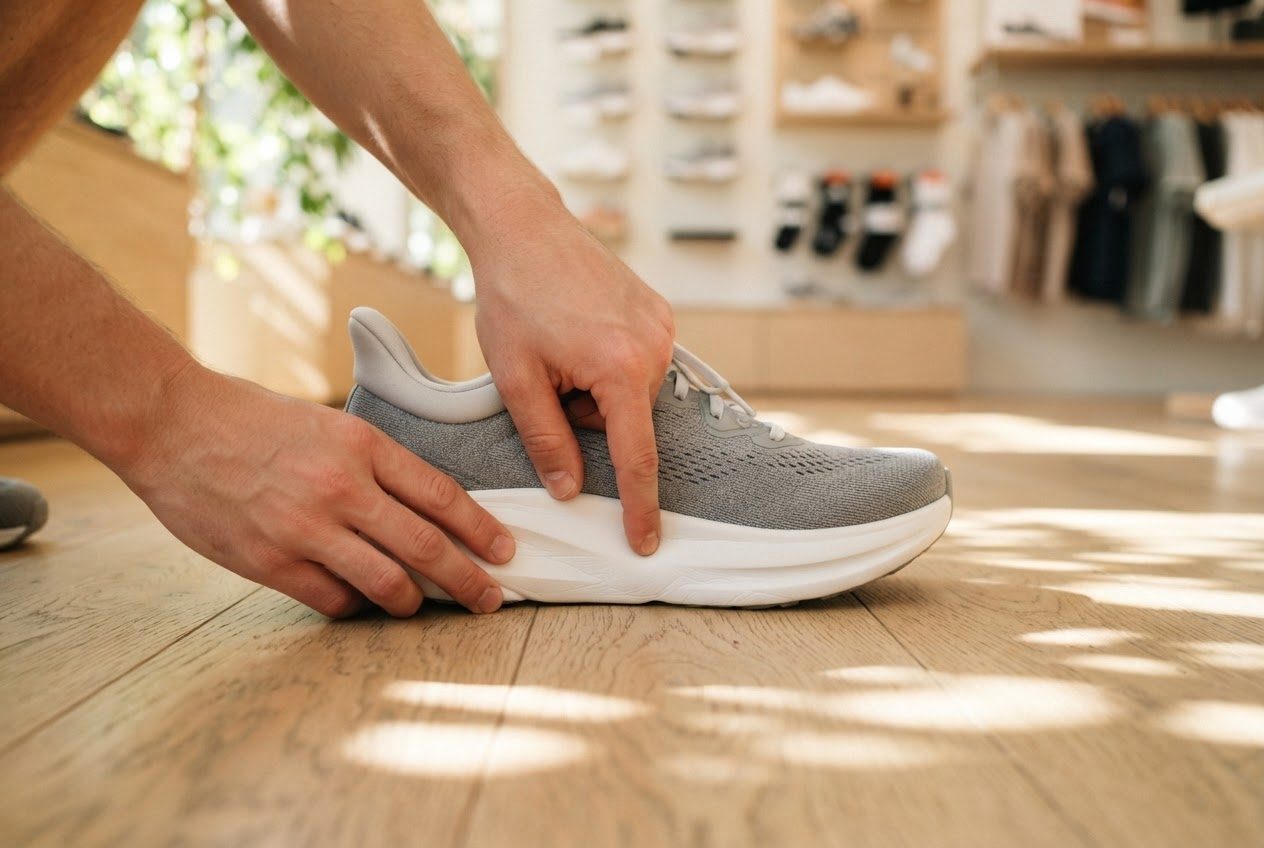
Fit, by a wide margin. An expensive shoe that's a half-size wrong will bother you more than a budget shoe that fits well. When trying shoes on:
- Shop in the afternoon, when feet are slightly swollen — closer to how they'll feel mid-run
- Leave a thumbnail's width of space at your longest toe
- Your heel shouldn't slip when you walk or jog a few steps
- Wear the socks you actually plan to run in
A quick gait check at a running specialty store is usually free and can steer you toward neutral or stability shoes if you've had past knee or ankle pain — that guidance is worth more than any price jump.

How long will a budget pair actually last?
Lifespan varies by model, use, and comfort. Track mileage and inspect wear rather than promising a calendar lifespan.
Don't let the shoe decision hold you up
It's easy to spend more time comparing shoe prices than actually running in them. A comfortable pair in the $50–$100 range, correctly sized, is enough to get you out the door — and getting out the door consistently matters far more than the number on the receipt. For a deeper look at what to check for in that price range, see Best Budget Running Shoes for Beginners and How to Choose Running Shoes as a Beginner.
Once your shoes are sorted, the next small friction point for most new runners is what to do with a phone. A loose phone in a pocket or hand can throw off your stride the same way an ill-fitting shoe can. A lightweight running phone armband keeps it snug against your upper arm, minimizing bounce so you can focus on the run instead of your grip.
Run happy, run free.
FAQ
Is a $50 running shoe good enough for a beginner? A lower-priced purpose-built shoe may be an option if it fits comfortably and suits the intended use. Compare the specific models rather than assuming most beginners cannot notice a difference from a more expensive shoe.
Should I buy expensive shoes if I plan to run a race someday? Not right away. Start in a comfortable $50–$100 trainer, build your habit, and consider a race-specific shoe later once you know your pace, distance, and preferences.
Do more expensive running shoes prevent injuries? Price alone does not establish injury prevention. Choose comfortable footwear for the intended use, adjust training to your situation, and seek professional advice for persistent or concerning pain.