For most beginners, running by feel beats running by heart rate. Wrist-based optical sensors — the kind on almost every running watch — misread your actual effort more often than people realize, and "zone 2" training advice assumes lab-quality numbers (true max heart rate, lactate threshold) that a new runner simply doesn't have yet. The talk test gets you correctly paced for free, no watch required.

Why do watches get heart rate wrong?
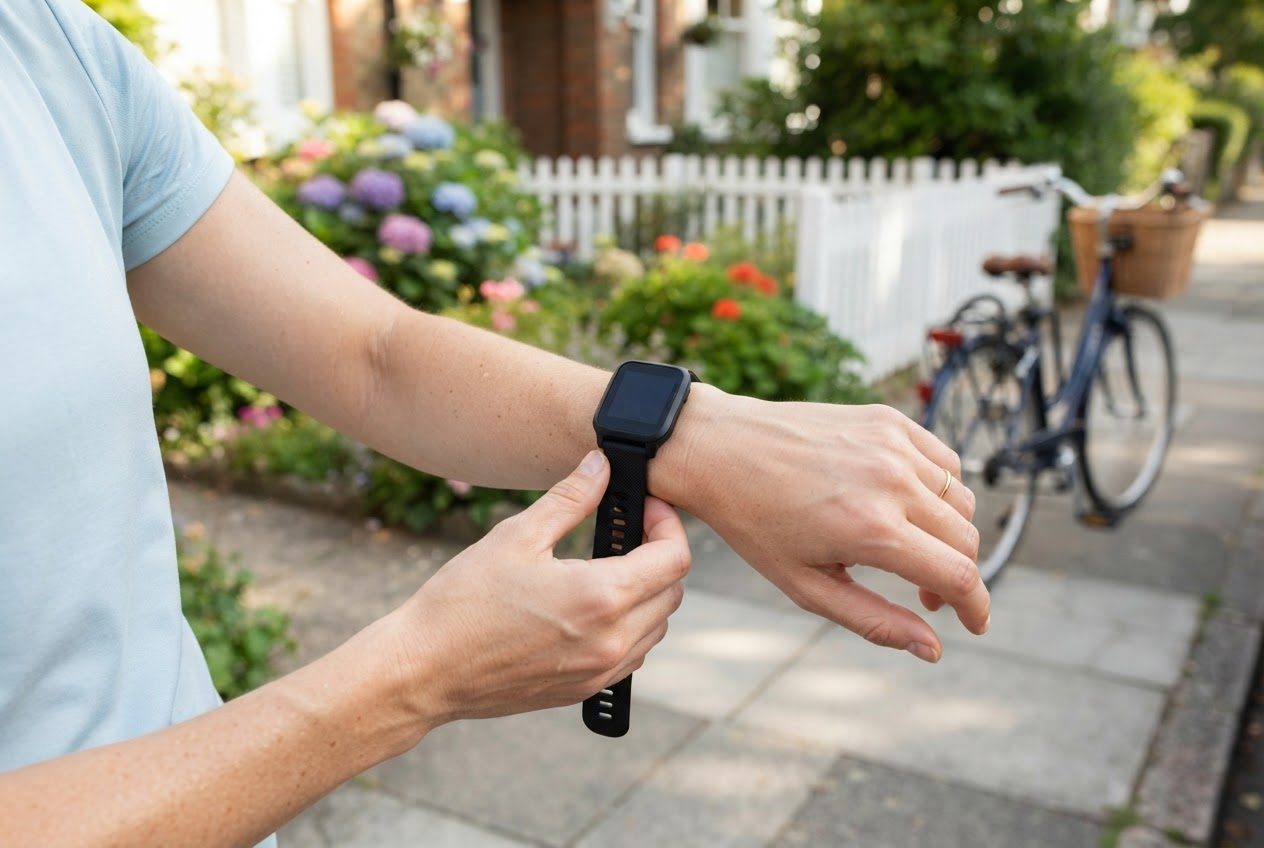
Most running watches measure heart rate optically, through a light shining into your wrist and reading the blood flow underneath. That method is easily thrown off by things that happen on every run: the watch bouncing slightly on your arm swing, a loose band, cold hands restricting blood flow, tattoos or darker skin absorbing light differently, or simply sweat changing the contact between the sensor and your skin. The result is a number that can lag your real effort by 10–20 beats, spike randomly, or flatline for a stretch — right when you're trying to use it to decide whether to slow down.
A chest strap reads the heart's electrical signal directly and is far more reliable, but most beginners are running with whatever came on their wrist, not a chest strap. If the watch is wrong, the "zone" it's telling you you're in is wrong too.
What is "zone 2" and why is it confusing beginners?
"Zone 2" is a heart-rate range meant to represent easy, aerobic-building effort — popular advice right now, and not bad advice in itself. The problem is how it gets calculated. Most apps estimate your zones from a formula like "220 minus your age," which is a rough population average, not a measurement of your heart. Your actual max heart rate can be 15–20 beats off that formula in either direction, which shifts your "zone 2" into what might really be too easy or already too hard for you.
Getting a real zone requires either a lab test or months of consistent training data — neither of which a beginner has in week one. Chasing a borrowed number instead of your own body's signal is exactly the kind of confusion that makes new runners think they're doing something wrong when they're not.
So how do you run "by feel" instead?
Feel is just the talk test, and it works from day one with zero equipment. You're at the right easy effort if:
- You can speak in full sentences without gasping for air
- Your breathing feels steady, not urgent
- Your shoulders and hands stay relaxed, not clenched
- You feel like you could keep going a little longer if you had to
- You finish pleasantly tired, not wiped out
If holding a conversation means slowing down more than feels natural, slow down more. We wrote a full case for why that's the point, not a compromise, in easy runs aren't wasted runs. For picking effort on harder days too, see how to pace yourself while running.

Is easy running overrated for true beginners?
Somewhat, yes — at least the strict version of it. "Run 80% of your miles easy" is solid advice for someone with months of base fitness, deciding how to balance hard and easy days. A total beginner doesn't have hard days to balance yet; almost every run is naturally moderate simply because the body is new to this. Worrying about precisely capping your heart rate on a couch mid-week jog adds a rule where none is needed yet. Run by feel, get consistent, and the harder-vs-easier distinction will matter more once you have weeks of running behind you. If you've been wondering whether your current pace even counts, is an 11-minute km too slow for a beginner? covers that directly.
When does heart rate actually become useful?
Heart-rate training earns its place later, not never. It starts to help once you've been running consistently for a few months, ideally with a chest strap for accurate numbers, and you already know roughly what your easy pace feels like without a screen. At that point, heart rate becomes a second opinion that confirms what your body is already telling you — useful, but no longer the primary signal. For more on when a watch's extra data is worth it at all, see do you need a running watch, or is your phone enough?
One thing that makes running by feel easier in practice: not having a screen demanding your attention mid-stride. Keeping your phone snug and out of your hand — a running armband does this — means the only thing left to check is how you actually feel.
FAQ
Is heart-rate training useless for beginners? No, it's just premature. It's a genuinely useful tool once you have a few months of consistent running and, ideally, a chest strap for accurate data — not a requirement for your first weeks of running.
Can I still glance at my watch's heart rate if I have one? Sure, as information — just don't let it override how you actually feel. If the number says "too hard" but you're breathing easily and could hold a conversation, trust the conversation.
What if I don't own a watch at all? You're not missing anything essential. The talk test costs nothing and works immediately; most of the fitness gains from easy running come from the consistent effort, not from the device measuring it.
Run happy, run free.