A zippered running belt stores your phone at your waist, but using it means reaching the opening, unzipping, taking the phone out and putting it back afterward. An open armband leaves the screen exposed; that changes the access process, not the need to stop somewhere safe before using your phone.
This is a comparison of carrying forms, not a contest between brands. And it is about the moment you want your phone—not another ranking of which carrier every beginner should buy.
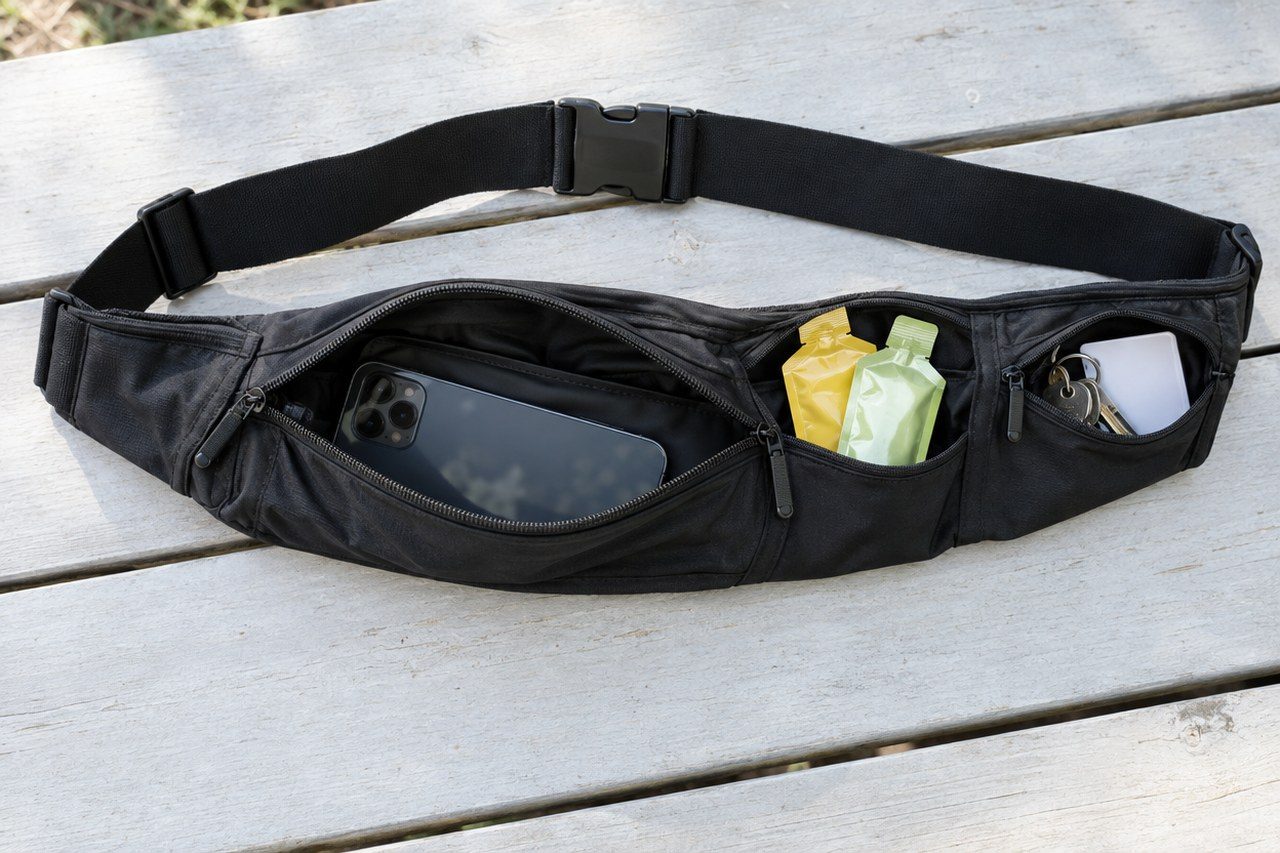
Why is storage different from access?
A phone can fit inside a pocket without being pleasant to take out and put back. Those are separate checks.
With a zippered belt, try the whole sequence while standing still: find the opening at your waist, open the zipper, take the phone out, use it, return it and close the zipper. A pocket can be useful storage even if that sequence feels fiddly. If the phone fits tightly through the opening, or the pocket sits closely against your body, you may find the removal and repacking more awkward than you expected.
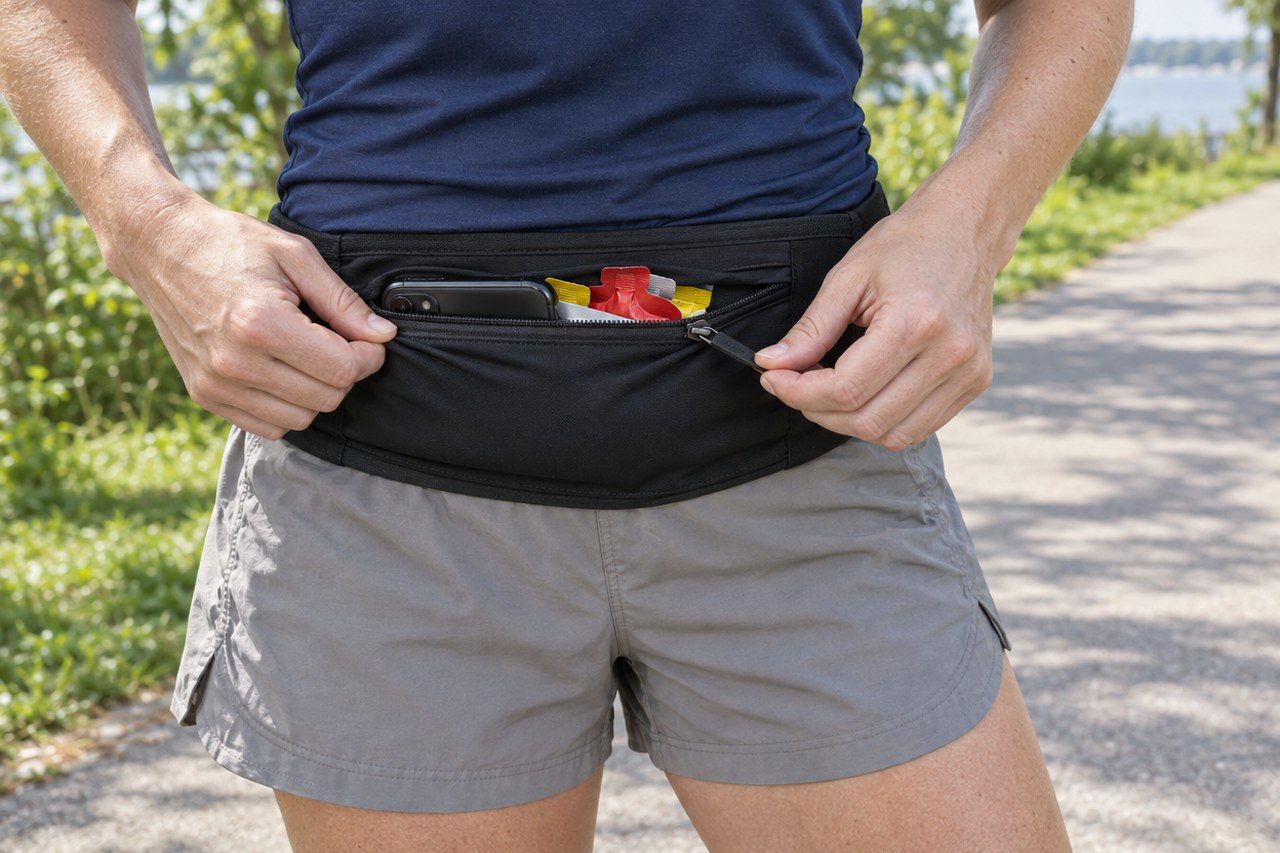
That is a possible experience to check, not a measured result for every runner. Waist position, clothing, the opening, the phone and its case all matter. Some running belts use stretch openings or other closures rather than zippers; the zipper sequence here applies specifically to zippered phone pockets.
What changes with an open armband?
Armbands are not all the same. A pouch-style armband can place a window over the phone; an open holder does not use that same enclosure. Do not assume every armband has an exposed screen or a detachable mount.
The LULURUN running armband has an open silicone holder that grips the phone at its corners. No pouch or plastic window sits over the screen. You do not have to open a phone-storage zipper to view that exposed screen, although you still need to pause somewhere safe before checking or using the phone.
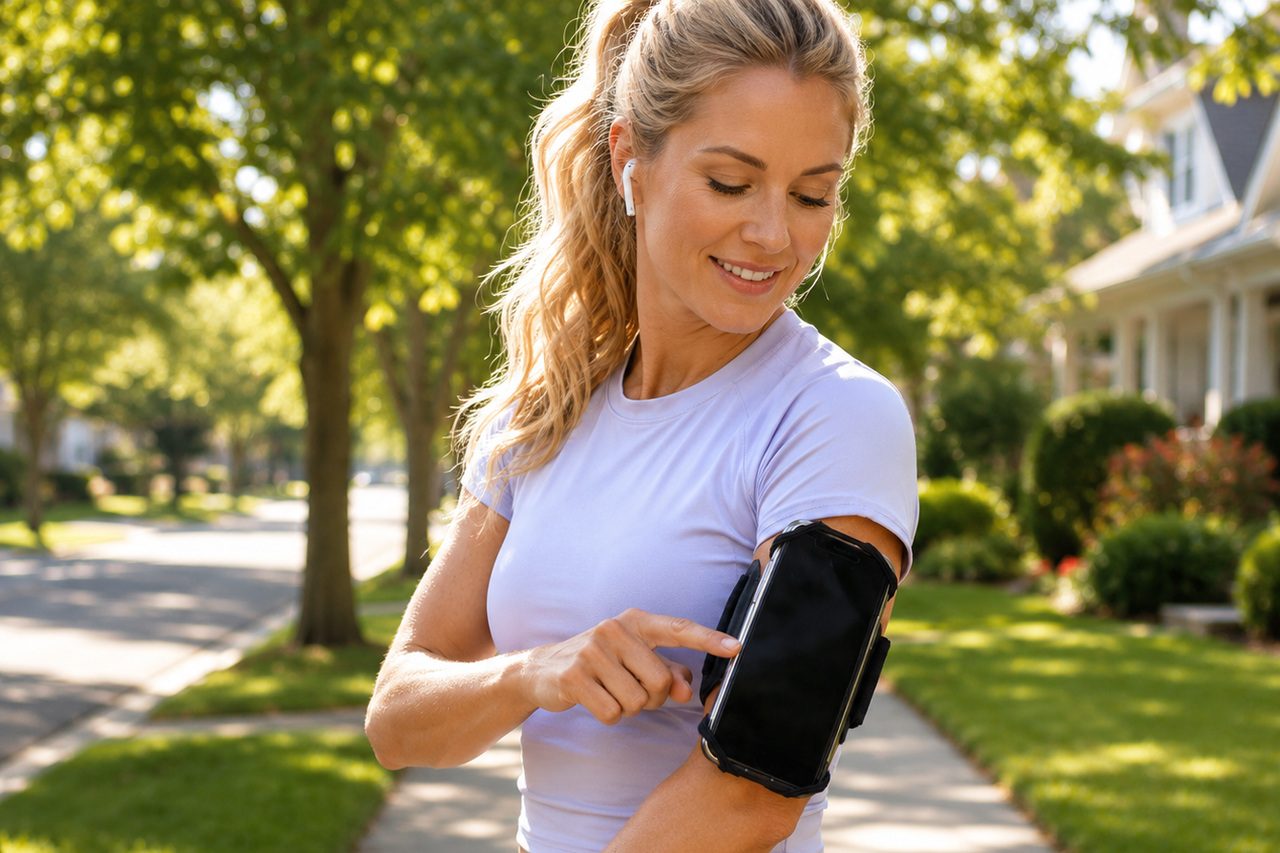
Seeing the screen on your arm and holding the phone in your hand are different actions. LULURUN's detachable mount uses a 90° twist lock, so the phone holder can come off while the band stays on your arm. Detach only when stopped, and check the mount is securely locked again before moving.
An open holder does not remove every step. If you want the phone in your hand, detaching and reattaching still take attention. If viewing it on your arm feels awkward, an exposed screen alone does not settle the choice.
How can you compare the actual motions?
Use the same phone, case and clothing when checking either form. Stay stopped in a safe place for the access check.
| Part of the task | Zippered running belt | Open armband |
|---|---|---|
| Reach the phone | Reach the waist pocket and its opening | Reach the phone position on your arm |
| See the screen | Open the pocket and take the phone out | An open holder leaves the screen exposed |
| Hold the phone in your hand | Remove it from the pocket | Check whether that armband has a detachable holder and follow its instructions |
| Put it away again | Reinsert it and close the zipper | If detached, reattach and check the lock as the maker directs |
This table describes the access route, not stopwatch results. We have not tested which is faster for different runners. What matters is whether you are comfortable repeating the complete process with your own setup.
For the separate question of how a detachable mount works, read our twist-lock guide.
What should you check besides the opening?
A belt may suit you if you prefer your phone at your waist and its actual pockets fit the things you want to bring. Check each compartment rather than assuming every running belt carries a phone, keys and food together. If you dislike equipment on your arm, easier screen exposure may not outweigh that preference.
An armband may suit you if you prefer the phone on your arm and the holder is compatible with your setup. Neither category automatically means less movement, lower weight or greater comfort. Try the loaded fit instead of judging only the empty carrier.
LULURUN states a 5.0–6.9-inch phone range and a 10–16-inch (25–41 cm) upper-arm range. Use slim or clear cases within the stated phone range; thick, rugged and MagSafe wallet cases are not compatible, including thick clear cases. Screen size alone is not a guarantee that a particular phone-and-case combination fits.
LULURUN is sweat resistant, not waterproof, and its open holder does not shield the phone from water. A zippered belt pocket should not be assumed waterproof just because it closes; check the selected model's stated protection separately.
Choose the form whose complete routine makes sense to you: carrying, stopping, accessing, putting away and checking the fit again. A pocket you already own can also be enough. There is no need to add gear simply because you have started running.
FAQ
Are all running belts awkward to open? No. Some do not have zippers, and openings and fit vary. With a zippered pocket, try removing and replacing your actual phone and case rather than judging storage space alone.
Can I use LULURUN without opening a phone pouch? Yes. Its open silicone corner holder leaves the screen exposed without a phone pouch or plastic window over it. Stop somewhere safe before viewing or using the phone; holding it in your hand requires the separate detachment step.
Does an open armband make phone access faster than a belt? This guide does not establish a speed advantage. It explains different steps; choose by your phone-and-case fit, wearing preference and experience of the complete stopped access routine.
Run happy, run free.