To share a running path with cyclists, follow the path’s local rules, move predictably, stay aware of passing traffic, and move fully out of the travel space when you stop. These habits can reduce confusion, but no routine guarantees safety—and cyclists have responsibilities too.
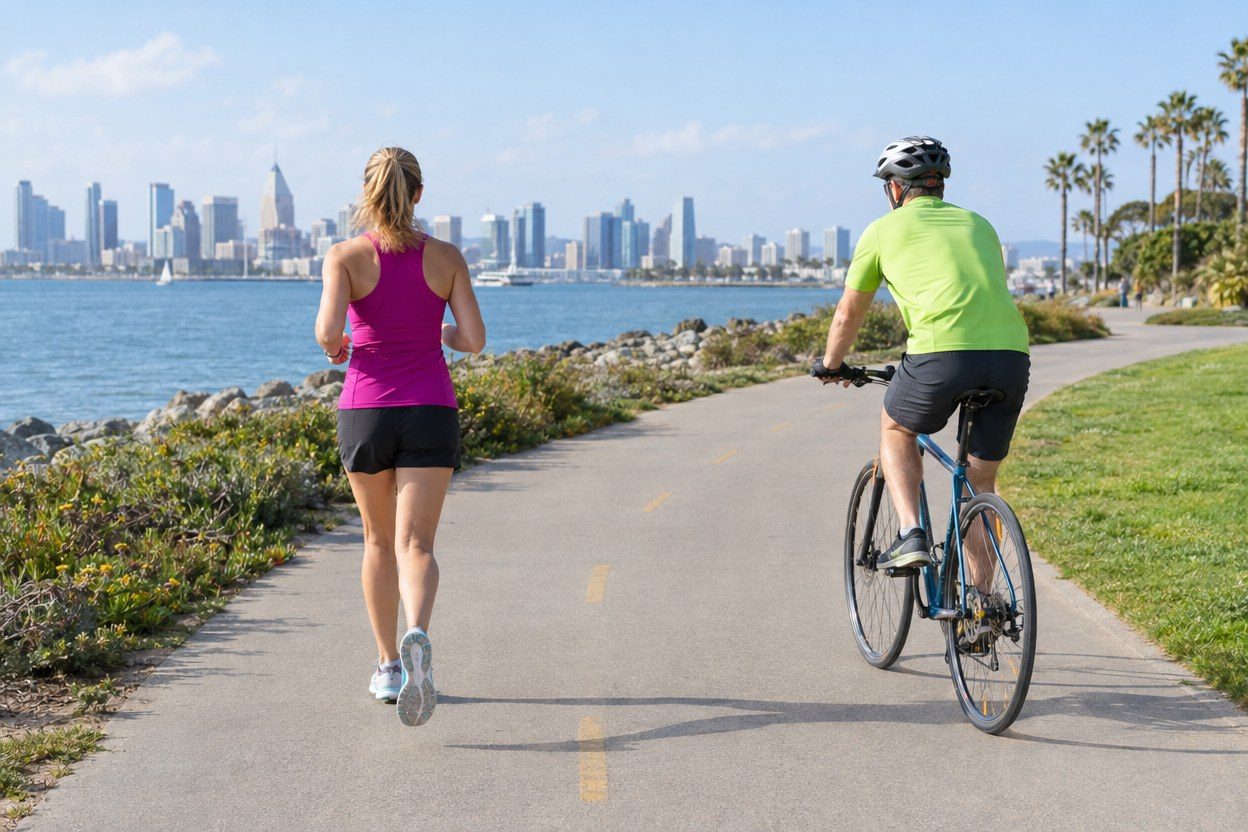
A shared path can be a lovely place for an easy outing: people walking, commuting, rolling, or enjoying the same stretch of sunshine. You do not have to race anyone or disappear into the verge whenever a bicycle approaches. The goal is to make your next movement easy for other people to understand.
Which side of the path should you use?
Read the signs and markings at the entrance. Some routes separate walking and cycling space; others are shared, have a one-way section, or use local passing conventions. Use the space designated for you rather than assuming every paved route works the same way.
For a specific example, King County Parks’ trail etiquette guidance describes staying right and passing left on its regional trails. It also asks users to leave room, announce passes, and slow down when passing. That is local guidance, not a left/right rule for every country or path.
If markings are unclear, check the operator’s current information or choose a simpler route while you get familiar with the area. A route that suits your first outing is more useful than one with a reputation for being “the best.”
What does moving predictably look like?
Keep a reasonably steady line within the appropriate space. Avoid suddenly drifting across the path to look at the view, greet a friend, or turn around. Before changing direction, look and wait for a clear opportunity.
That does not mean you must hold a rigid pace. You can slow down, walk, or end the outing; make those changes with awareness of the people around you.
With a partner, leave enough space for others rather than spreading across the route. Narrow to a smaller footprint when needed, without suddenly stepping into another person’s line. If your partner moves at a different pace, you can plan a meeting point instead of running side by side throughout; our guide to comfortable beginner pacing helps keep your own effort friendly.
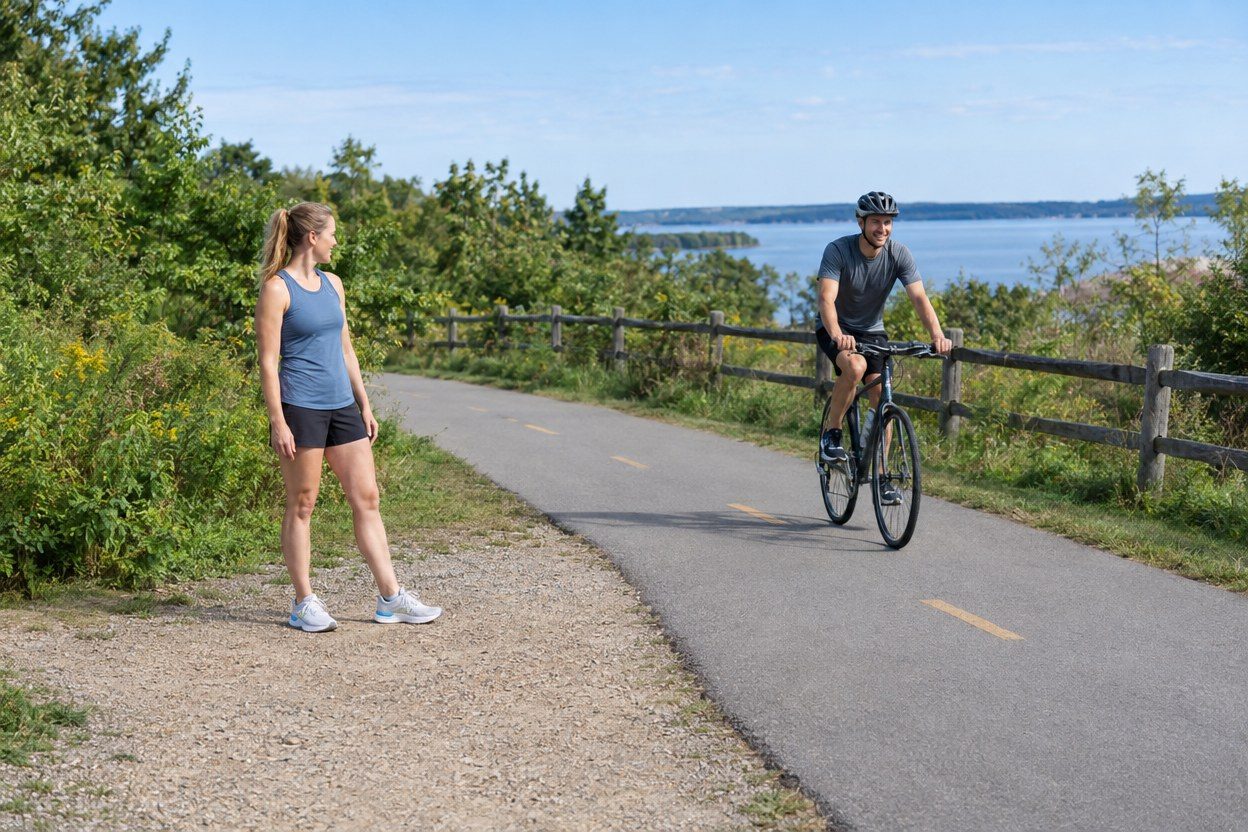
What should you do when someone calls out a pass?
A bell or “on your left” is generally an announcement of where the person intends to pass, not an instruction to jump in that direction. Take a moment to understand what you heard, keep your movement predictable, and avoid an abrupt sideways dodge.
If there is room to give more space within your designated area, do so gradually after checking your surroundings. A small acknowledgement can help, but there is no need for a big gesture or a sudden stop.
The person overtaking also needs to choose an appropriate speed, wait for sufficient space, and pass considerately. You cannot make an unsafe close pass safe by reacting perfectly. If someone repeatedly behaves dangerously, move to a suitable safe stopping place and consider reporting the problem to the path operator.
How do you stop or take a walk break?
For a walk break, check around you and reduce speed gradually where there is room. You do not need to leave the path simply because you are walking, provided walking is permitted and you are following local guidance.
For a full stop, use a designated turnout, bench area, or other suitable space entirely outside moving traffic. Check before stepping across another lane, and do not block an entrance or accessible route.
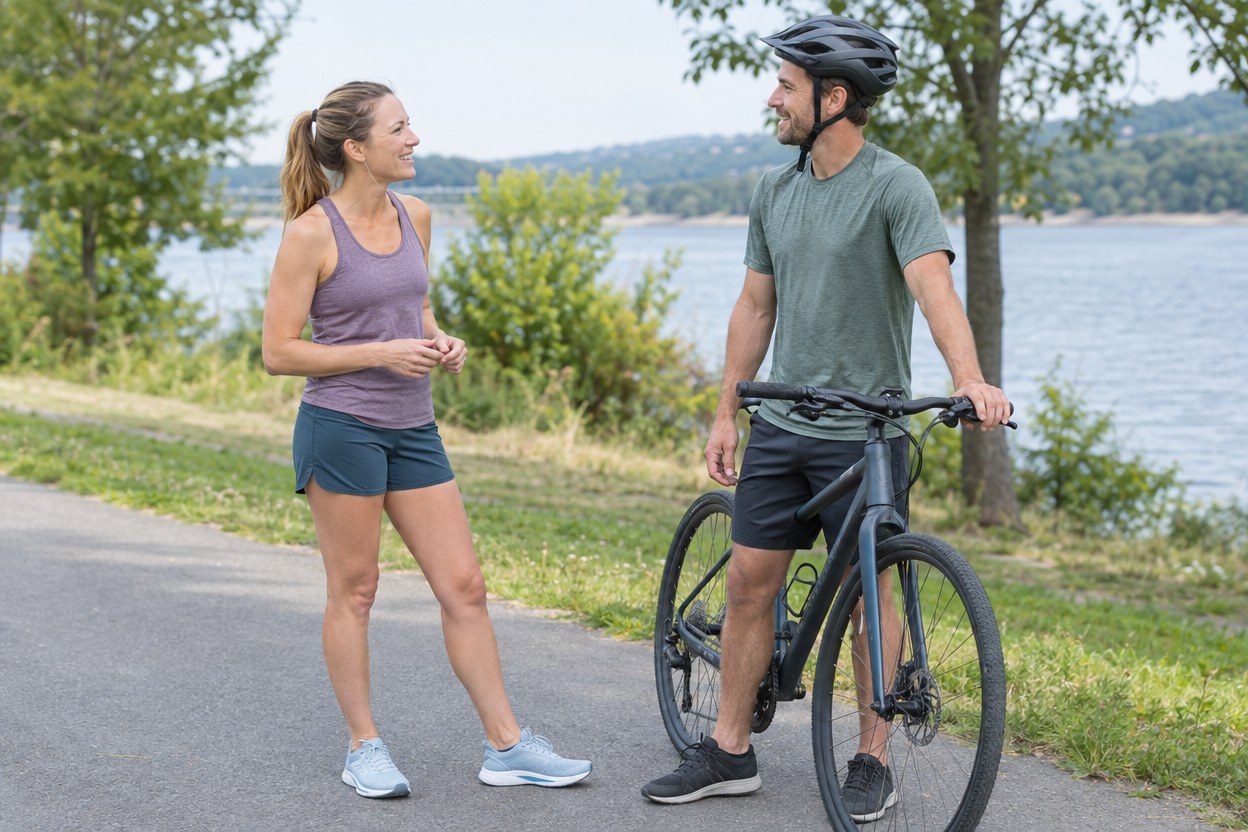
A photo, shoelace adjustment, or conversation is easier to enjoy when people do not have to weave around you. When rejoining, look in both directions as appropriate and wait for a gap rather than stepping out mid-sentence.
What deserves extra attention at junctions?
Slow enough to understand entrances, crossings, blind corners, and the people using them. Follow signs and signals, check the actual movement around you, and do not assume that hearing no bell means nobody is coming.
At a road crossing, use the designated crossing and its instructions. A shared-path routine is not a substitute for road-crossing awareness. Be especially willing to pause when visibility is limited or several people are trying to move through the same small space.
The same consideration works when you are overtaking a walker: announce yourself in a way consistent with local guidance, leave room, and wait if the available space is too narrow. Shared space works better when courtesy goes in both directions.
Can you listen to music on a shared path?
Check any local restrictions and choose whether audio fits the conditions. If it makes approaching people or instructions harder to notice, turn it down or put it away. On a busy section, leaving it off may be the simpler choice.
One earbud is not a safety guarantee, and no headphone type removes the need to look and stay attentive. Our beginner guide to running with music covers deciding when listening adds to an outing and when it is better to keep things quieter.
FAQ
Do runners always have priority over cyclists?
Do not assume a universal priority rule. Follow the operator’s signs and local requirements, and avoid treating priority as a reason to make a sudden movement.
Should I jump off the path when I hear a bell?
Not automatically. Understand the passing announcement, keep a predictable line, and make any change gradually where it is safe and appropriate.
What is an easy pre-run checklist?
Check the signs, identify a suitable stopping spot, leave space, and keep audio from distracting you. Then enjoy your outing while staying aware of the shared space.
A friendly path is not one where everyone moves at the same speed. It is one where there is room—and consideration—for different people to enjoy the journey.
Run happy, run free.