Yes, you can run together as a couple with different paces: share the outing, but agree in advance when you will stay together and when you will run separately. A familiar loop, a meeting time, and permission to walk can make the plan enjoyable for both of you.
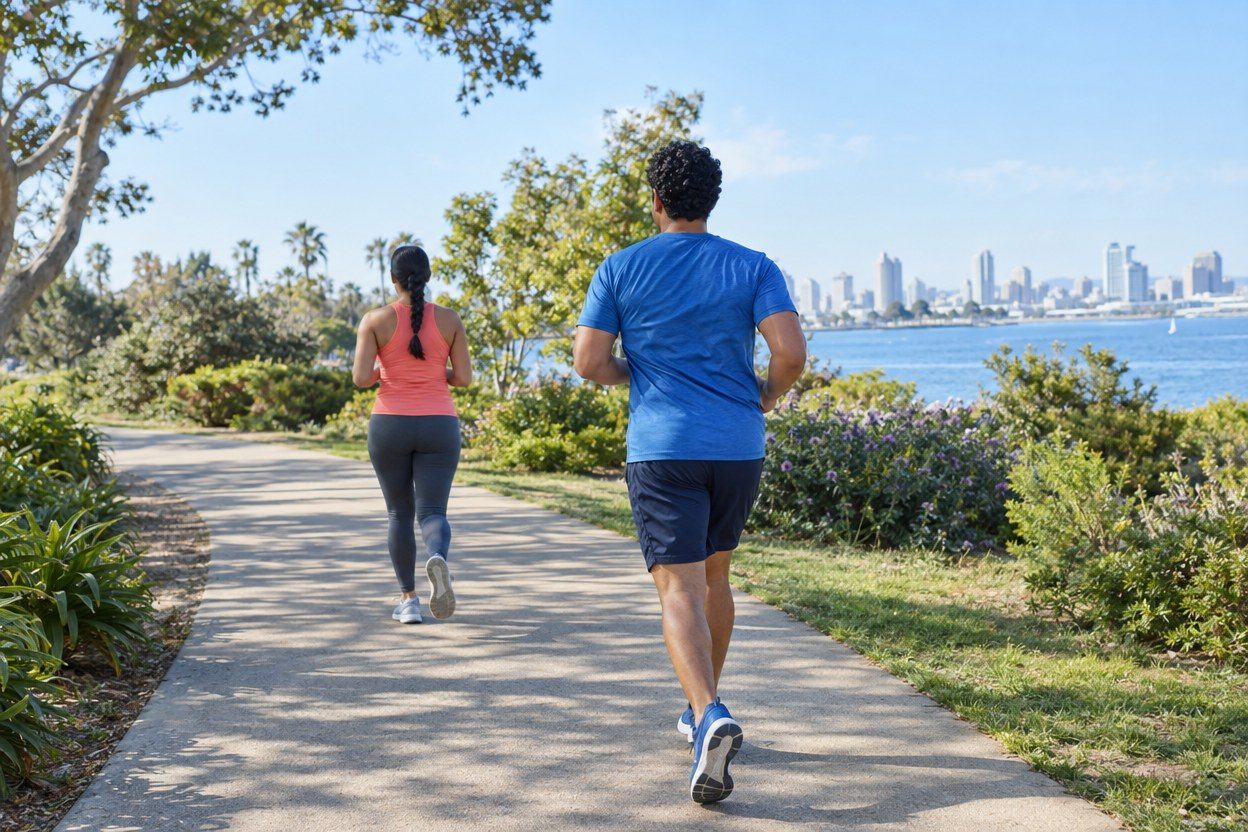
You do not have to spend the whole run beside each other for it to count as time together. Leaving home together and catching up on a bench afterward might be the version that works.
The useful question is not, "Which of us should try harder?" It is, "What would make this outing comfortable for each of us?"
What should you agree on before leaving?
Start with the purpose of this particular outing. Is it a chance to chat, two separate runs that happen to start together, or a short walk before you each do your own thing?
Try a conversation like this:
"I'd like to go with you, but I don't want to chase your pace. Could we walk to the park together, do our own loops, and meet at the entrance afterward?"
That is a practical request, not an apology. The faster partner also gets to say what they had planned. If they want a focused training session, today might be better as separate runs followed by breakfast.
Agree on four things before you start:
- Together or apart: which part of the outing are you sharing?
- Effort: will the shared portion be comfortable for both people?
- Meeting point: choose one recognizable place, not "somewhere near the end."
- Change of plan: what happens if someone wants to stop early?
You can choose a short outing first. There is no need to solve every future run in one conversation.
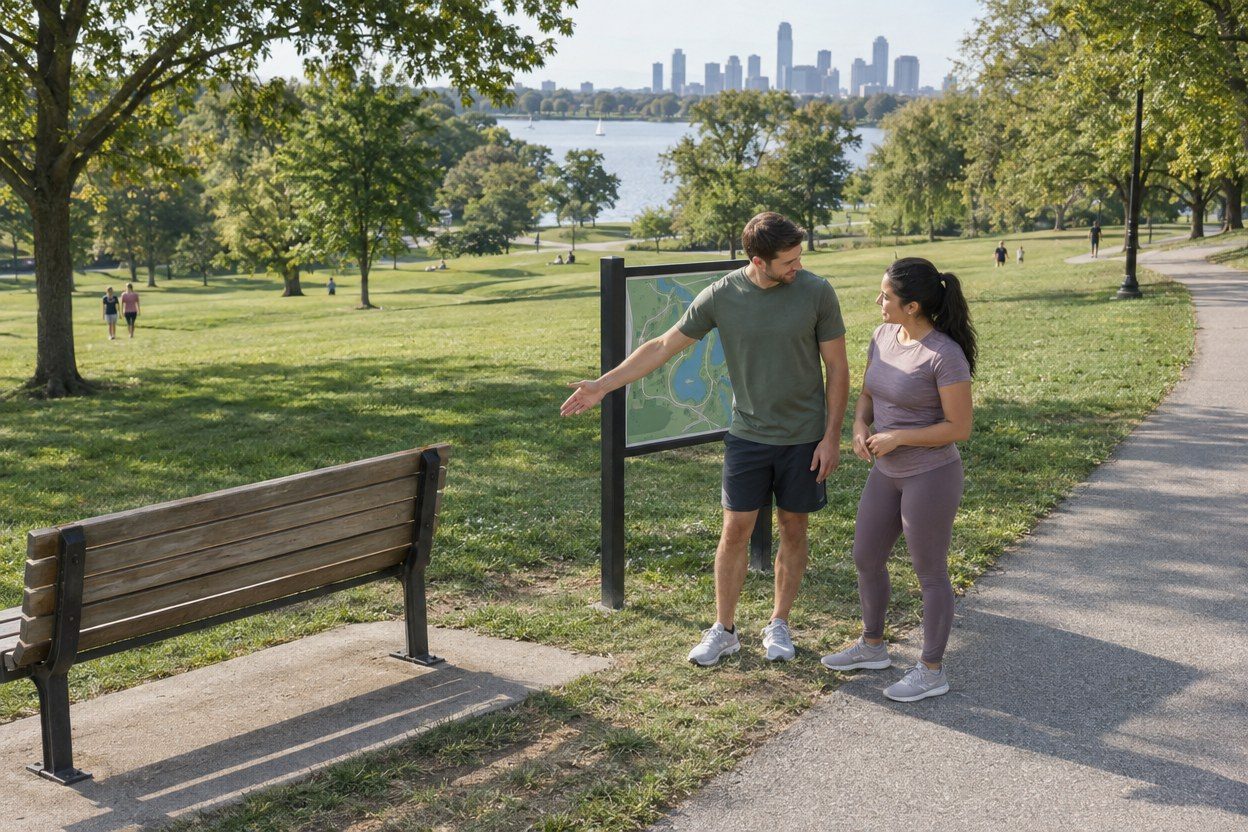
How can a loop help you run at different paces?
A short, familiar loop can let each person move comfortably without turning the outing into a chase. You might both start near the same bench, then run or walk your own laps until an agreed meeting time.
Choose a route with clear sightlines and straightforward exits. Follow any direction signs and keep clear of other path users. Do not send one person against the flow on a one-way track just to arrange more encounters.
Meeting by time rather than identical distance can be useful. For example, you might agree to be back at the entrance at a particular time, with no requirement to complete the same number of laps. Choose the duration together; the example is a planning idea, not a training target.
If one partner is comfortable finishing sooner, the plan can include waiting off the path. Otherwise, shorten the outing rather than assuming someone will be happy to wait indefinitely.
What if you want to stay side by side?
Make the shared portion a genuinely shared effort. Walking together may be more comfortable than trying to find a running speed that suits both of you that day.
If you choose to jog, the person who prefers the slower pace should not have to repeatedly ask the other person to stop pulling ahead. Agree beforehand that either person can call for a walk or an earlier finish.
The faster runner can decide whether that fits their day. They do not need to disguise a harder workout as a social outing, and the newer runner does not need to turn every outing into a test.
Our run-walk guide for beginners explains another way to mix the two activities. The important part here is agreeing together, rather than surprising your partner halfway around the route.

What if pace comments make the run less enjoyable?
Ask for the kind of company you actually want.
"I'd love your company today, but I'd rather not get pace or technique feedback unless I ask."
A supportive partner may not realize that constant encouragement sounds like a request to speed up. Be specific: you might want conversation, quiet company, or simply someone to meet afterward.
If the same uncomfortable dynamic keeps repeating, separate runs are a reasonable choice. They are not evidence that you are a bad match as people. You can share plenty of things without sharing every workout.
For the broader comparison problem, see how to stop comparing your running pace with others. This outing only needs a plan that fits the two people actually taking part.
How can you keep the plan simple?
For your next outing, choose just one version: walk there together, move separately on a familiar loop, then meet at a clearly named spot.
Use the comfortable clothes and shoes you already have. There is no special equipment needed to be good company; our running gear is optional, not an entry ticket.
Afterward, ask one small question: "Would we do that again, or change something?" Adjust the route or shared portion next time. You are planning a pleasant part of the day, not negotiating a permanent pace agreement.
FAQ
Does the slower runner always have to catch up?
No. You can agree to move at a comfortable shared effort or spend part of the outing apart. A plan that repeatedly makes one person chase is worth changing.
Should the faster runner keep looping back?
Only if both people like that arrangement and the route makes it straightforward without obstructing others. Separate laps and a meeting point may feel less pressured.
Is running separately still a good option for a couple?
Absolutely. Shared preparation and time afterward can be enjoyable even when the runs themselves are separate. Neither person needs to prove closeness by matching a pace.
Run happy, run free.