Use mileage and visible wear as rough prompts to check your shoes; calendar age alone is not a fixed replacement deadline.
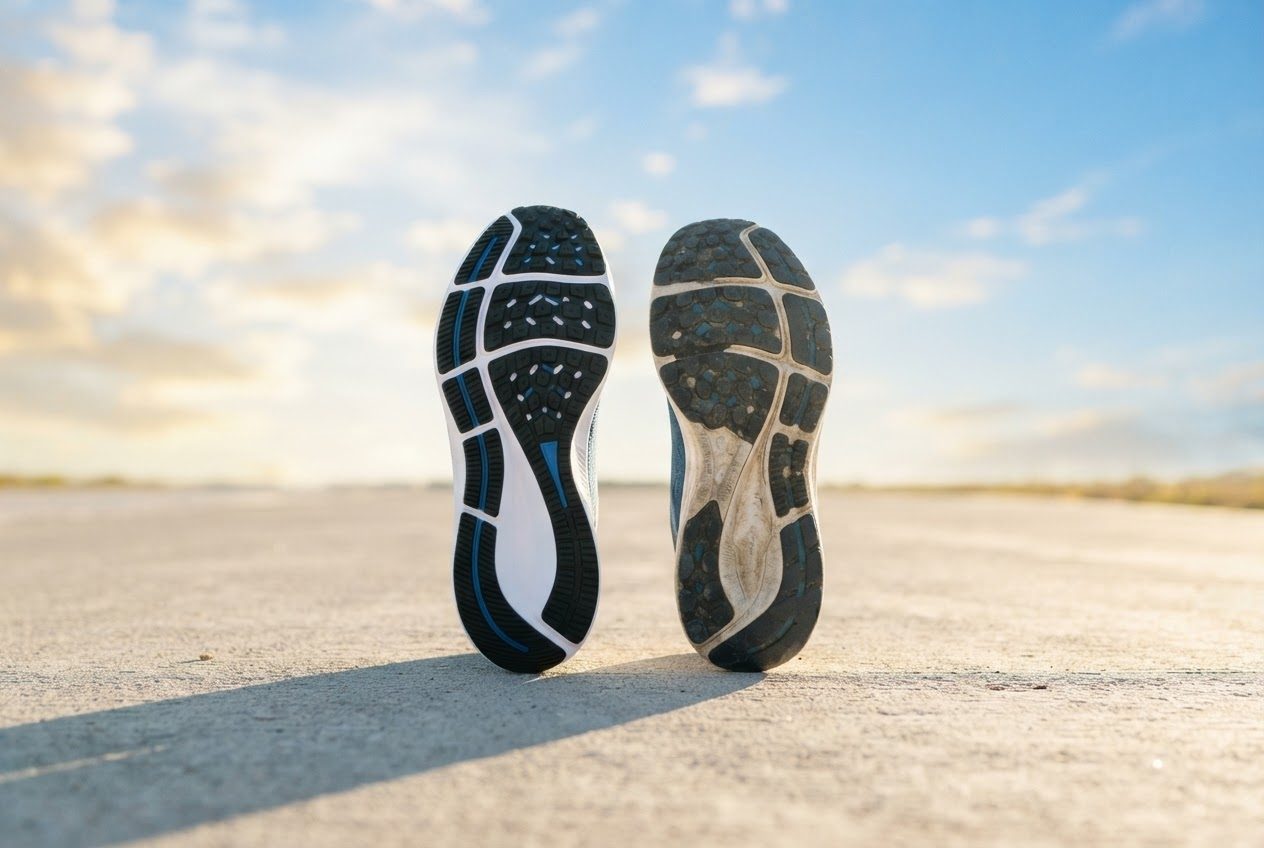
Why running shoes wear out even if they look fine
Midsole feel and performance can change with use even when the outsole looks intact. New aches are a reason to reassess activity and footwear, but they do not prove that cushioning is worn out or that replacement alone will resolve them.
Signs it's time for new shoes
You don't need to track exact mileage to know when to replace your shoes. Watch for these signs instead:
- New or returning aches in your shins, knees, hips, or feet with no other obvious cause
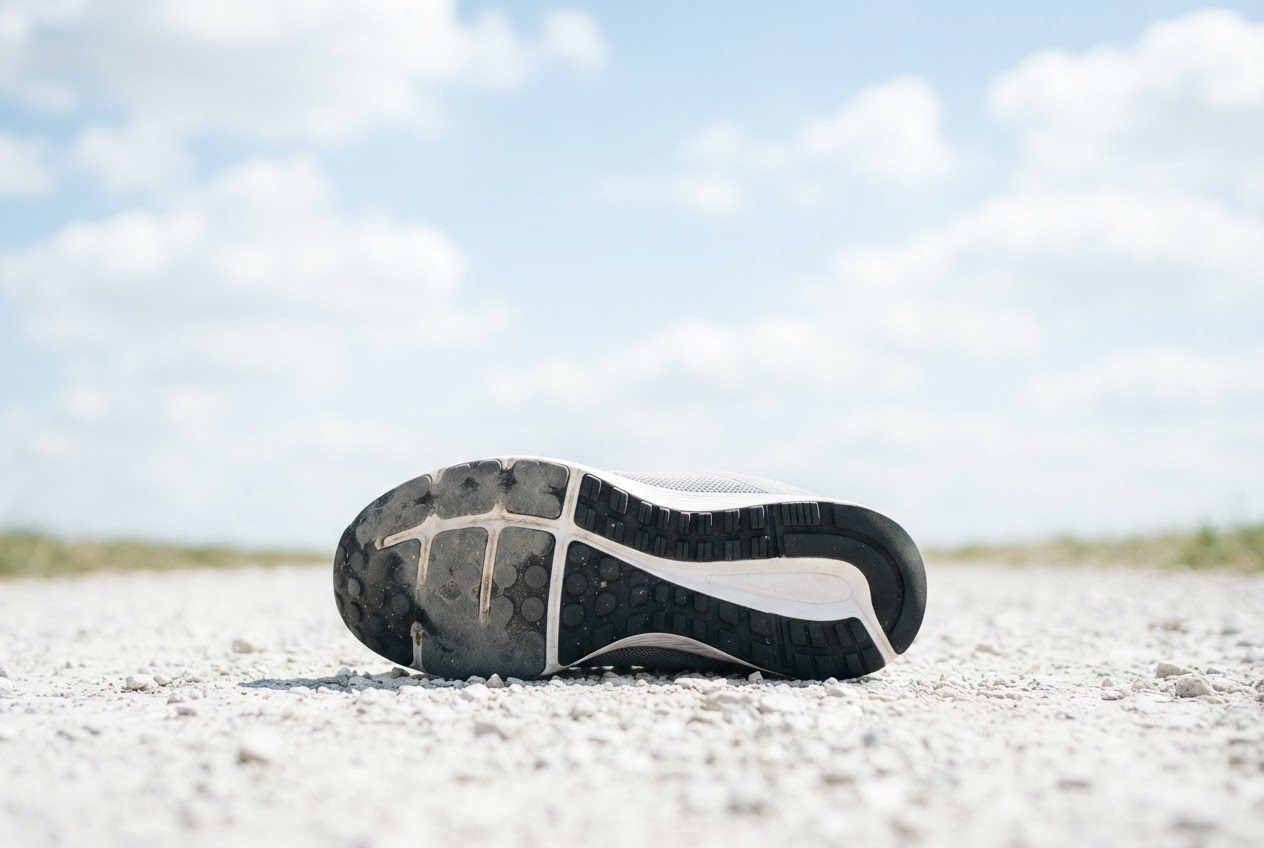
- Visible wear patterns — the outsole tread is smooth in spots, or one edge is wearing faster than the rest
- The midsole feels flat — press a thumb into the foam; older shoes feel noticeably harder or less springy than a fresh pair
- Creasing or a "broken-in" look through the middle of the shoe that doesn't bounce back
- You honestly can't remember when you bought them or how far you've run in them
If two or more of these are true, it's a good time to start shopping for a replacement, even if the shoes still "look" wearable.
Does running surface or body weight change the timeline?
Wear varies by model, use, runner, and conditions. Treat mileage as a prompt to inspect comfort and condition rather than assuming pavement, track, or body weight determines a fixed cushioning lifespan.
Does rotating two pairs make shoes last longer?
Rotating pairs spreads use between them, so each pair may accumulate mileage more slowly over calendar time. A benefit from a day of foam decompression or a fixed total mileage limit has not been established here. One comfortable pair can be a starting option. Related reading: how much beginners should spend on running shoes, how to choose running shoes as a beginner.

A simple way to track it without overthinking
Most beginners don't log every mile, and you don't have to. A low-effort system works just as well:
- Write the purchase date on the inside tongue with a marker
- Set a phone reminder for 5 months out to do a quick feel-and-look check
- If you use a running app, glance at your logged distance for that pair every few weeks
- Keep an eye out for the wear signs above between check-ins
These checks can help you notice changes, but they do not guarantee that you will identify every footwear problem before symptoms appear.
Tracking your runs makes this easier
Logging runs can help you monitor shoe use. A 360° rotating running armband can keep a compatible phone accessible, but some movement is normal. Pause somewhere safe before viewing distance or pace or adjusting the mount.
FAQ
Can I keep running in old shoes if they still look okay? Inspect fit, comfort, and wear rather than relying on appearance alone. New pain deserves attention, but it does not by itself prove that old cushioning is the cause.
Do more expensive running shoes last longer? Not necessarily. Price is more about cushioning style, fit, and materials than durability. A budget pair and a premium pair can both wear out around the same mileage — see our guide to budget running shoes for beginners for options that hold up well without overspending.
How many miles is too many for one pair of shoes? Mileage is a rough prompt to inspect wear and comfort, not a universal danger threshold. Seek advice for persistent or concerning pain instead of attributing it to a mileage number.
Run happy, run free.