Loud footsteps almost always come down to how hard you're hitting the ground, not how heavy you are. If every stride sounds like a slap or a stomp, you're probably landing with a straight leg out in front of you (braking) instead of landing softly underneath your body. The good news: this is one of the easiest form things to fix, and it usually makes running feel smoother too.

Why do my feet slap so loudly when I run?
That "slap" sound is your foot decelerating hard against the ground, often because it lands too far ahead of your hips. Picture reaching your foot way out in front like you're stepping on a bug — that's a braking motion, and it's noisy because your whole foot (or heel) crashes down instead of rolling through. Quieter runners land with their foot closer to underneath their center of mass, so the impact gets absorbed and spread out instead of slammed down all at once.

Does loud running mean bad form?
Not automatically — but it's a useful clue. Think of loud footsteps as a check-engine light, not a diagnosis. Cadence (how many steps per minute), stride length, and landing position all play a role, and they're related:
- Overstriding — reaching too far forward with each step, which forces a harder heel landing
- Low cadence — fewer, longer strides put more force into each footfall
- Tense legs — locking your knee or ankle on landing sends the shock straight into the ground (and up your joints) instead of absorbing it
If you want the fuller posture picture — head, arms, hips — our running form guide for beginners covers the basics that also happen to make you quieter.
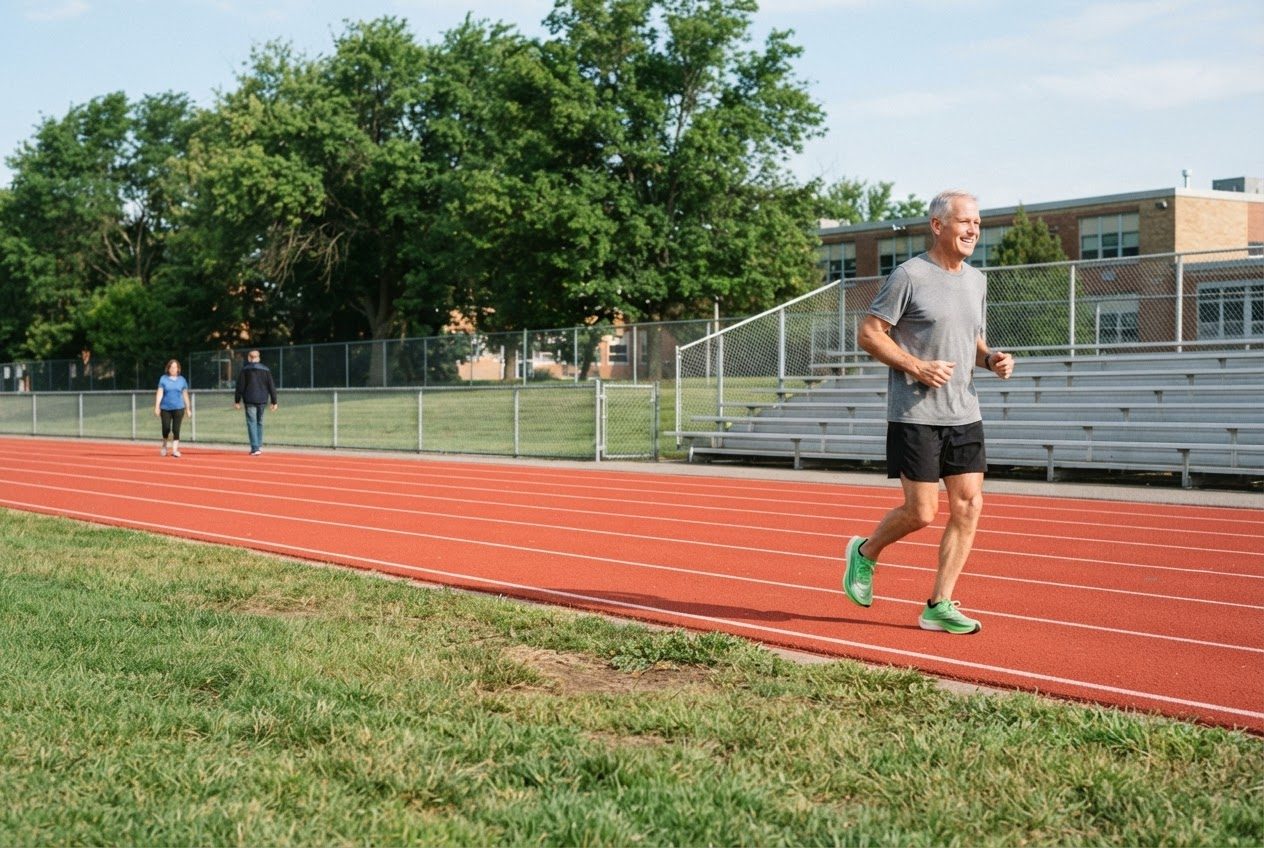
How can I make my footsteps quieter?
Try this on your next easy run — it doubles as a fun little game with yourself:
- Aim for "ninja feet." Literally imagine sneaking past someone sleeping. Most runners naturally shorten their stride and soften their landing just by picturing this.
- Speed up your cadence slightly. Taking quicker, shorter steps (even 5–10% quicker) is the single fastest way to quiet down, because it naturally stops overstriding.
- Land under your hips, not out front. Your foot should touch down close to beneath your body, not reaching ahead of it.
- Relax your ankles and knees. A soft, slightly bent landing absorbs sound (and impact) instead of transferring it straight into the pavement.
- Run a few strides barefoot on grass or carpet at home. Bare feet give you instant, honest feedback — you'll feel exactly how much softer a light landing is.
None of this requires new gear. It's a few minutes of playful attention on an easy run, and most beginners hear (and feel) the difference within the same session.
Is quieter running actually better for me?
Generally, yes. A softer landing spreads impact forces more gradually through your foot and leg, which tends to feel easier on your knees and shins over time. It's also a nice built-in feedback loop — since you can hear your form in real time, your ears become a free coach. If your feet get loud again later in a run, that's often just fatigue creeping in, and it's a friendly signal to shorten your stride or take a walk break, no drama needed.
And if you're running with your phone along for tunes or tracking, keeping it snug against your arm rather than bouncing in a pocket helps you actually notice these little form cues instead of being distracted by gear shifting around. That's exactly the kind of steady, no-fuss setup our LULURUN armband is built for.
FAQ
Is it normal for beginners to run loudly at first? Yes, very common. New runners often overstride while they're still finding their rhythm, and footsteps naturally quiet down as cadence and body awareness improve.
Will better running shoes fix loud footsteps? Shoes can soften the sound a little, but the biggest fix is almost always form — landing softer and closer under your hips — not swapping gear.
Should I worry if my feet suddenly get louder mid-run? Not really — it's usually just fatigue. Treat it as a gentle nudge to shorten your stride, relax your shoulders, or take a short walk break.
Run happy, run free.