Most runners don't need a gel until they've been moving for about 45 to 60 minutes or more — the rule that matters is time on your feet, not the distance on the race bib. That means a lot of beginner 10Ks fall right on the edge: if you'll finish in under 50 minutes, you probably don't need fuel at all beyond a normal breakfast. If you're closer to 70–80 minutes, a little fuel partway through can help more than it costs.
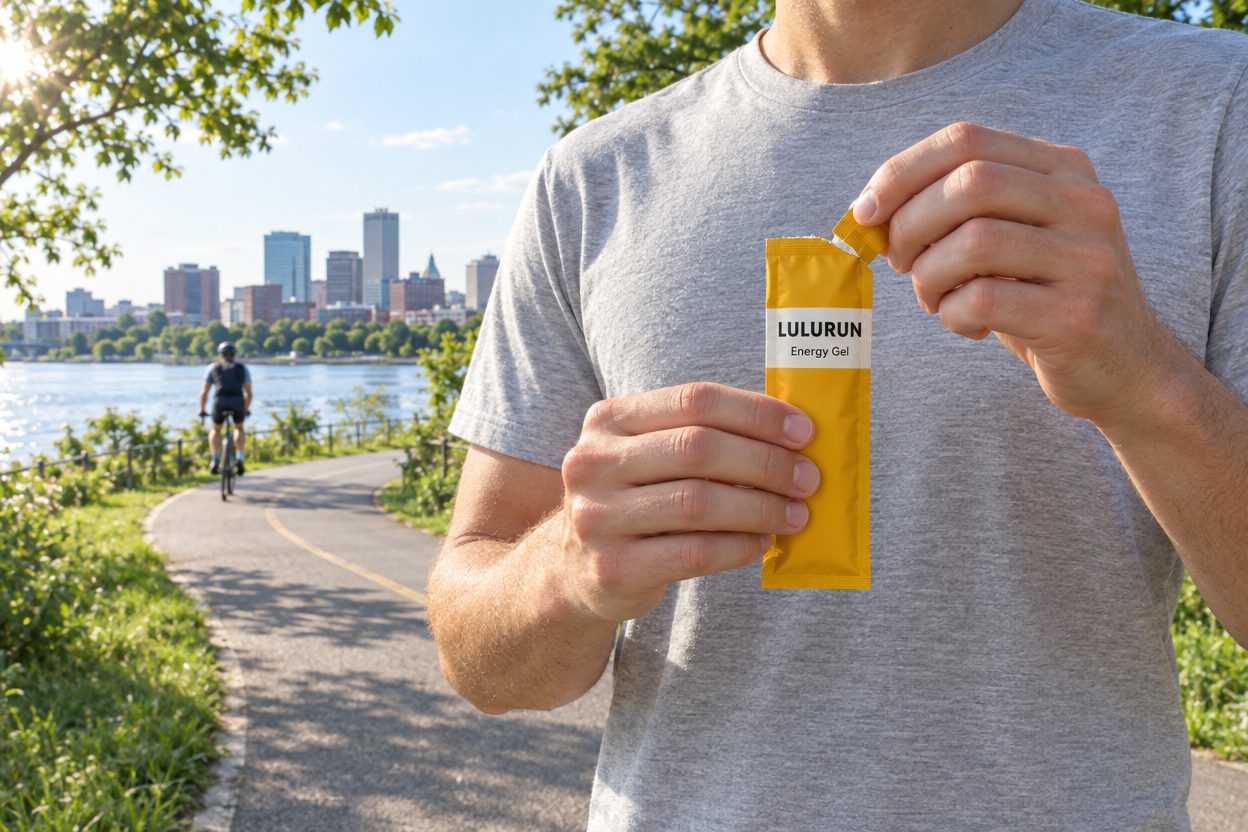
Why time, not distance, decides if you need fuel?
Your body carries roughly 60–90 minutes of easily accessible stored energy (glycogen) for moderate effort, and that clock starts ticking the moment you start running — it doesn't care whether you're covering a 10K or a hilly 8K that takes just as long. A fast runner finishing a 10K in 42 minutes is done before the tank is anywhere near empty. A beginner run/walking the same distance in 75 minutes is running well past that window and can genuinely feel it in the last stretch. Match your fuel plan to your clock time, not the number printed on your race shirt.
So do beginners actually need gels for a 10K?
For most first-time 10K finishers, no — not as a hard requirement. If your 10K takes under about 50–60 minutes, a normal pre-run breakfast (see what to eat before running) covers you, and water along the way is enough hydration. Gels earn their place once you're regularly out there past that window, training for a half marathon, or you simply know your stomach appreciates a small energy top-up on longer long runs. Trying a gel for the first time on race morning is the one thing to avoid — always test any fuel on a training run first.
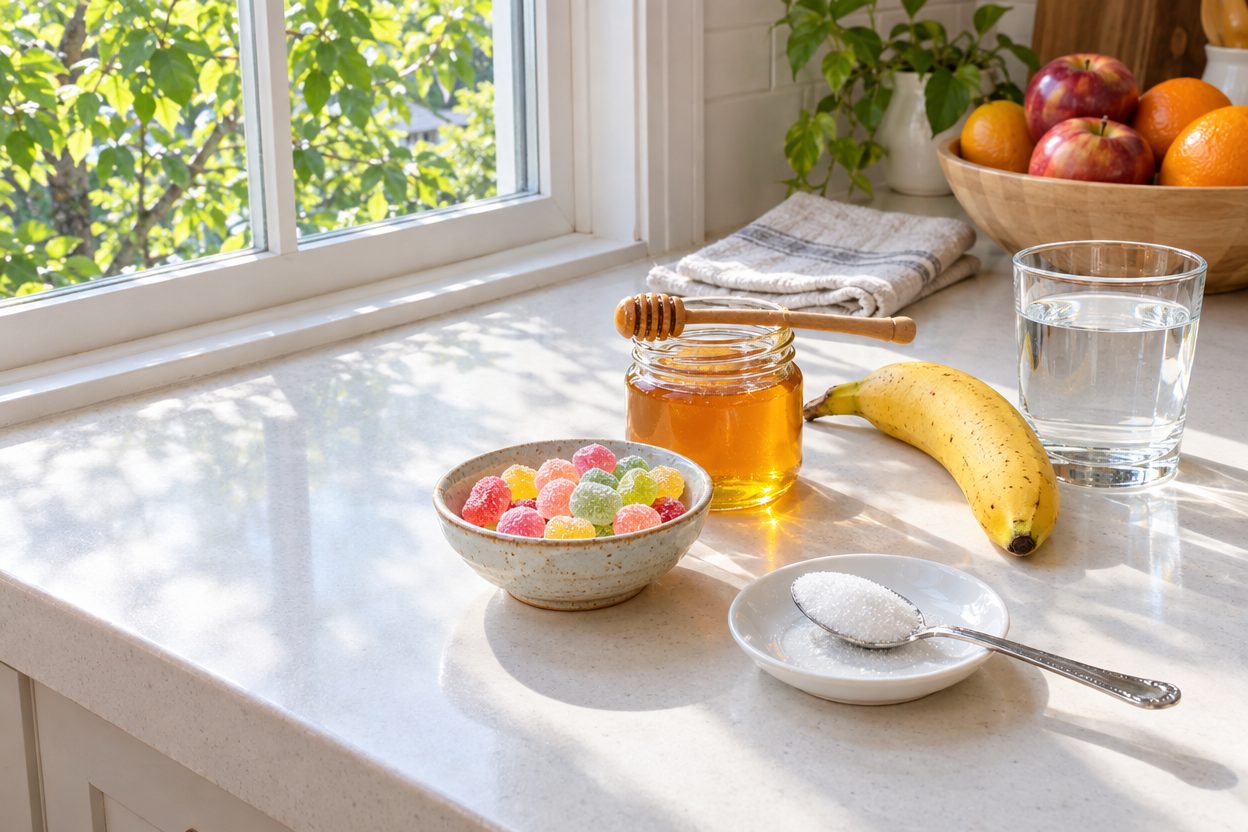
What's cheap fuel that actually works, if you want to skip gels?
Gels are convenient, but they're not the only source of quick carbohydrate, and plenty of runners fuel long runs on things already in the kitchen:
- Table sugar or a handful of jelly candies — plain sucrose is fast-digesting carbohydrate, the same basic fuel a gel is built from, just without the packaging or the price.
- Honey — a small honey packet (the kind from a diner) travels well and gives a similar quick-carb hit.
- Maltodextrin mixed into a sports drink, or Gatorade on its own — this is the closest homemade match to what's actually in most gels, and sipping it gives you fuel and fluid in one go instead of fuel plus a separate water stop.
Whatever you pick, the same rule applies as with gels: test it on a training run, not on race day, since everyone's stomach reacts a little differently to concentrated sugar mid-run.
How do I carry fuel on a 10K without it being annoying?
A gel packet, a couple of candies, or a small flask fit easily in a pocket, but so does your phone, and juggling both in your hand for over 45 minutes gets old fast. Keeping your phone snug on your arm in a running armband frees up your hands and pockets for the actual fuel, so reaching for a gel mid-run doesn't mean fumbling your phone too. For the rest of what to carry on race day, what should I bring on a run? covers the full checklist.
FAQ
Will I bonk if I skip fuel entirely on a 10K? Unlikely if you finish in under about an hour and ate a normal breakfast beforehand. "Bonking" — hitting empty — is mostly a concern once you're running well past 60–90 minutes.
Is Gatorade enough on its own, or do I need a gel too? For a beginner 10K, Gatorade alone (or any sports drink with real carbohydrate) is usually enough fuel if you feel you need anything at all — gels are for convenience and concentration, not a requirement layered on top.
Should I try a new gel or sugar source for the first time on race day? No — test it on a training run first. New fuel and new race-day nerves together is how stomach trouble happens; a familiar fuel is a boring, reliable one.
Run happy, run free.