Comfortable, supportive shoes may suit a short first outing. As your routine changes, compare fit and comfort, but no shoe category or number of weekly runs guarantees protection for your knees or feet.
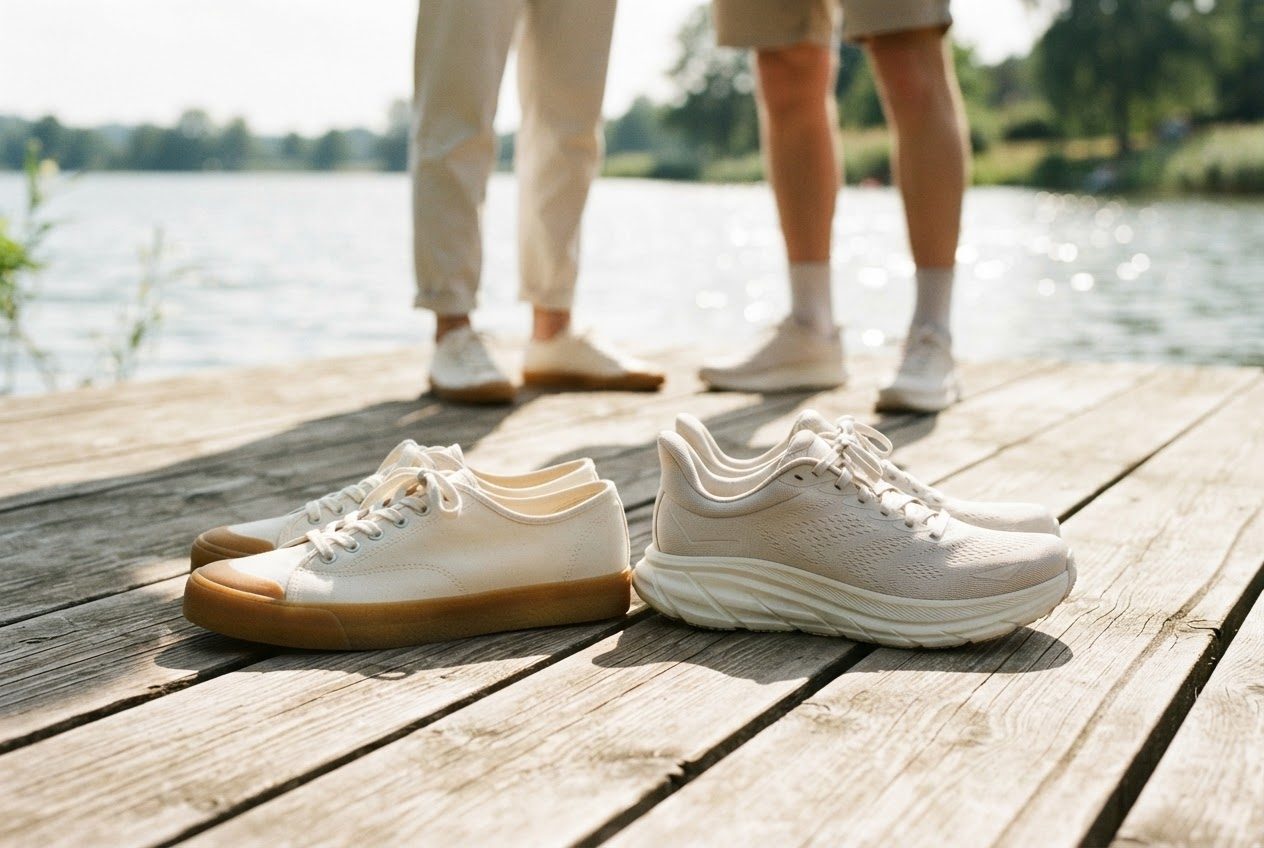
There's no rule that says you need a $120 pair of running shoes before you're "allowed" to start. That belief stops more people than any actual injury does.
What's actually different about running shoes?
Running shoes and regular sneakers (or fashion trainers) can look similar but are built for different jobs:
- Cushioning placed for forward motion — running shoes cushion the heel-to-toe roll of a running stride; flat fashion sneakers or basketball shoes cushion for side-to-side movement instead.
- Lighter, more flexible soles — made to bend at the ball of the foot for push-off, where many casual sneakers have a stiffer, flatter sole.
- Breathable uppers — mesh that manages sweat and heat over 30–60 minutes of continuous movement, which canvas or leather sneakers weren't designed for.
- Fit for a moving foot — running shoes size in a toe box that gives your foot room to swell and splay on longer efforts; snug fashion sneakers don't.
None of that means your current sneakers are unsafe for a first jog around the block. It means the gap starts to show up as the miles add up.
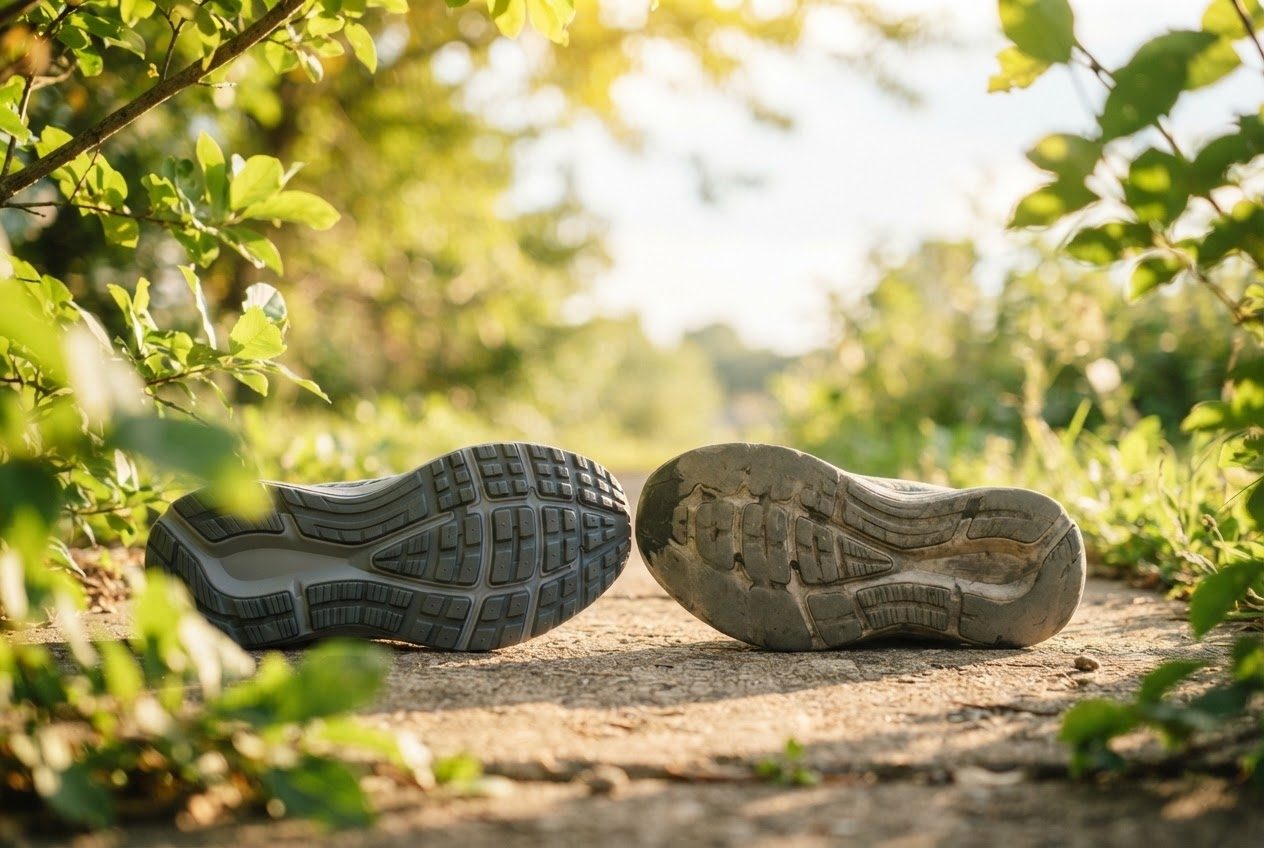
When should you actually switch to real running shoes?
- You're running more than twice a week. Repeated impact is where shoe-specific cushioning earns its keep.
- You want a different feel on longer outings. Compare actual comfort rather than using a twenty-to-thirty-minute threshold to predict soreness.
- Something's starting to ache — shins, knees, or the arches of your feet after a run is a signal worth listening to, not pushing through in the same shoes. If shin pain shows up specifically, our shin splints guide covers what to look for in a shoe.
- You're enjoying it and want to keep going. This is the honest trigger for most beginners — not a fixed week number, just "I think I'm going to keep doing this."
If none of that applies yet, your current sneakers are a perfectly reasonable place to start.
What if my sneakers clearly aren't built for running?
A few signs your current pair will actively work against you, even early on: the sole is completely flat with no give at all (thin skate shoes, boat shoes), the shoe is noticeably heavy, or it's already worn down unevenly from other use. In those cases, borrowing a supportive pair or picking up an inexpensive dedicated pair sooner is worth it — see our guide to choosing running shoes as a beginner and how much beginners should actually spend on running shoes — you don't need to spend a lot to get the basics right.
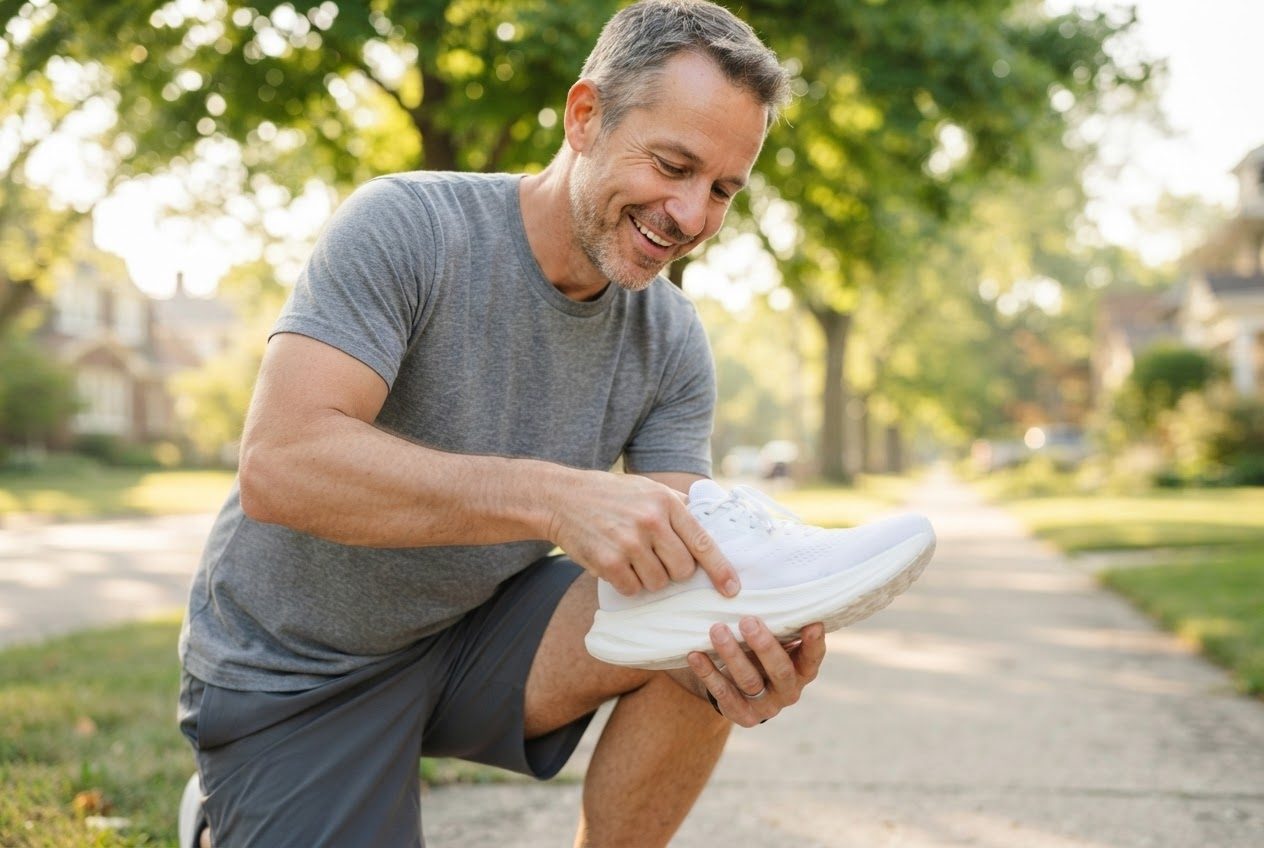
Quick steps if you're deciding right now
- Own any flexible, cushioned athletic shoes already? Just start with those.
- Plan to run more than twice a week or for 30+ minutes? Budget for a proper pair before you ramp up.
- If your shins, knees, or arches ache, stop and consider appropriate advice rather than treating pain as a signal to buy different shoes.
- When you do buy, don't over-research it — a budget pair built for running beats an expensive pair bought for the wrong foot type.
What about the rest of your gear while you're just starting out?
Shoes are the one piece of gear worth prioritizing early; almost everything else — including how you carry your phone — can wait until you know you'll keep running. When you're ready to think about that, a running armband is one of the simplest additions: it keeps your phone snug against a stable point on your arm instead of loose in a pocket, which matters once your runs get long enough that phone battery and comfort start to matter as much as your shoes do.
FAQ
Will running in regular sneakers hurt my knees? A short easy outing may be comfortable in supportive shoes, but no shoe or number of runs guarantees freedom from knee pain. Stop if pain appears.
Do I need trail running shoes if I'm only running on sidewalks? No. Trail shoes are built for grip on uneven, loose surfaces — road or standard running shoes are the right choice for sidewalks, tracks, and paved paths.
Can I run a 5K in regular sneakers? Plenty of beginners do finish a first 5K in whatever supportive shoes they own. It's more about comfort on the day than performance — if your feet feel fine on your longer training runs, they'll likely feel fine on race day too.
Run happy, run free.