Break in new running shoes gradually: wear them around the house or on short walks first, then start with easy runs of 1–3 km, adding a little distance every few days over 1–2 weeks. Most modern running shoes don't need a long break-in period, but your feet still need time to adjust to a new shape, a new foam, and a new fit.

Do running shoes actually need breaking in?
Less than they used to. Older running shoes had stiffer materials that genuinely needed softening up before they felt comfortable. Today's foams and knit uppers are much more run-ready out of the box — but "ready" isn't the same as "identical to your old pair." Every shoe has a slightly different heel shape, toe box width, and cushioning feel, and your feet, tendons, and running form need a short adjustment window to get used to those differences, even in a well-fitting shoe.
How should you break in new running shoes?
Go slow and layer the introduction instead of jumping straight into a long run:
- Day 1–2: Wear them around the house or on a short errand walk to check for any pinching or rubbing before you commit to a run in them
- First run: Keep it short — 1 to 3 km on a familiar route, at an easy, conversational pace
- Next few runs: Add a little distance each time, but don't double up — one new-shoe run followed by a rest day or an old-shoe run is a good rhythm
- Watch your feet, not the calendar: If a spot feels hot or irritated, stop and check it before it becomes a blister
- Full transition: Most people are fully comfortable in a new pair within 1–2 weeks of regular running
If anything feels genuinely painful (not just "new"), that's a sign the shoe may not be the right fit — not something to push through.
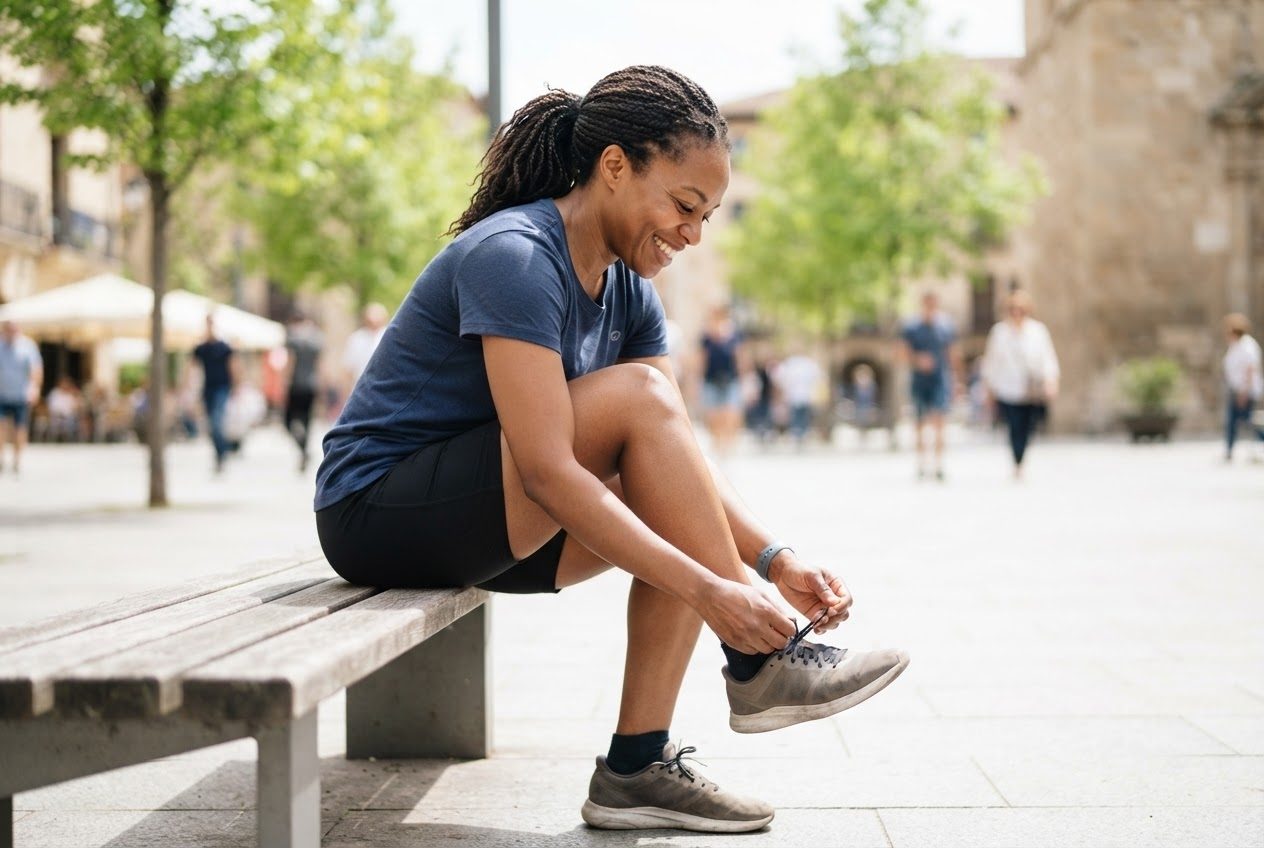
What if a new pair feels uncomfortable right away?
If a new shoe pinches or hurts, stop using it and reassess the fit. Seek advice for persistent pain or numbness, and check the specific seller’s return rules before testing outdoors. Related reading: budget running shoes for beginners.
How do you avoid blisters while breaking in new shoes?
Blisters during a break-in period are almost always a friction problem, not a "toughening up" problem:
- Wear the actual socks you plan to run in — thin dress socks or no-show socks often cause more rubbing than a proper running sock
- Check for seams or logos on the inside of the shoe that sit right against a pressure point
- Keep early runs shorter — friction adds up with distance, so a 2 km run in a new shoe is much lower-risk than a 10 km one
- Apply a bit of anti-chafe balm or a blister strip on known hot spots (heel, back of the ankle, tops of toes) for the first week

When should you retire your old pair?
Don't throw your old shoes out the moment new ones arrive. Keep them around for a week or two of overlap — alternating gives your feet a familiar option on days when the new pair needs a rest, and gives you a clear before-and-after comparison if something about the new shoe feels off. Once you're confident in the new pair, our guide on when to replace running shoes has the signs to watch for so you know when it's time to retire the old ones for good.
One less thing to break in
While your feet are adjusting to new shoes, it's a good time to simplify everything else about your run too. If you're still carrying your phone in a pocket or your hand, a 360° rotating running armband keeps it snug against your arm from the very first short run — one less variable to manage while your feet are doing the adjusting. Check it out at lulurun.run/#shop.
FAQ
How long does it take to break in new running shoes? Most runners feel fully comfortable within 1–2 weeks of regular, gradually increasing runs. Some very cushioned shoes feel great from the first step and need almost no break-in at all.
Should I run a long distance in brand-new shoes right away? Start with a short, comfortable outing if you want to test new shoes. Stop for rubbing or pain and reassess the fit rather than relying on a break-in schedule to prevent symptoms.
Is it normal for new running shoes to feel stiff at first? A little stiffness around the ankle collar or sole for the first run or two is normal. Sharp pain or pressure on one spot is not, and usually means the fit needs a second look rather than more breaking in.
Run happy, run free.